
Hey there! As a supplier of extruded lenses, I often get asked, "Are extruded lenses durable?" Well, let's dive right into this topic and find out.
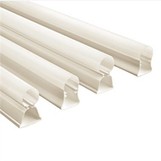
First off, let's understand what extruded lenses are. Extrusion is a manufacturing process where a material, usually plastic in the case of lenses, is pushed through a die to create a continuous shape. This process allows for the production of lenses with consistent cross - sections, like Extruded Linear Lens.
One of the key factors that contribute to the durability of extruded lenses is the material used. Most extruded lenses are made from plastics such as polycarbonate (PC) or acrylic (PMMA). Polycarbonate is known for its high impact resistance. It can withstand a fair amount of physical abuse without cracking or shattering. For example, if you have a LED Light Lens made of polycarbonate in an industrial setting where there's a risk of accidental impacts, it's likely to hold up well.
Acrylic, on the other hand, offers excellent optical clarity and is also relatively durable. It has good weather resistance, which means it can be used outdoors without significant degradation over time. A Plastic Diffuser Lens made of acrylic can maintain its performance even when exposed to sunlight and various weather conditions.
The manufacturing process itself also plays a big role in durability. Extrusion creates a uniform structure in the lens. This uniformity means that there are no weak spots or inconsistencies in the material that could lead to premature failure. The continuous production process ensures that each section of the lens has the same physical and optical properties.
Another aspect to consider is chemical resistance. Extruded lenses need to be able to resist the effects of chemicals they might come into contact with. For instance, in a laboratory environment, lenses could be exposed to various cleaning agents or chemicals. Polycarbonate and acrylic both have decent chemical resistance, although the specific resistance can vary depending on the type of chemical.
Now, let's talk about environmental factors. Temperature changes can have an impact on the durability of extruded lenses. Extreme heat can cause the plastic to expand, and extreme cold can make it brittle. However, modern extruded lenses are designed to have a wide operating temperature range. Polycarbonate, for example, can typically operate in temperatures ranging from -40°C to 120°C (-40°F to 248°F), which makes it suitable for a variety of environments.
Humidity is also a factor. High humidity levels can potentially cause fogging or moisture absorption in the lens. But with proper coatings and materials, this can be minimized. Some extruded lenses are treated with anti - fog coatings to prevent this issue, especially in applications where clear vision is crucial, like in some lighting fixtures.
In terms of long - term use, extruded lenses have proven to be quite reliable. Many of our customers have reported using our lenses for years without any significant degradation in performance. For example, in the automotive industry, extruded lenses are used in various lighting applications. These lenses need to withstand the vibrations, temperature changes, and exposure to road debris over the lifetime of the vehicle. And they generally do a great job.
However, like any product, extruded lenses are not indestructible. They can be damaged if they are subjected to excessive force or improper handling. For example, if a lens is dropped from a great height or hit with a heavy object, it might crack or break. Also, if it's exposed to chemicals that it's not resistant to, it can get damaged.
So, are extruded lenses durable? In most cases, yes. They offer a good combination of material properties, manufacturing quality, and resistance to environmental factors that make them suitable for a wide range of applications. Whether you need a Extruded Linear Lens for a lighting project, a Plastic Diffuser Lens for a display, or a LED Light Lens for an industrial setting, you can count on their durability.


If you're in the market for extruded lenses and want to discuss your specific requirements, we'd love to hear from you. We can provide you with more detailed information about the durability of our lenses based on your application. Just reach out, and we'll be happy to help you find the perfect solution for your needs.
References
- "Plastics in Optical Applications" - A technical guide on the properties and uses of plastics in optical components.
- "Extrusion Manufacturing Handbook" - Details the extrusion process and its impact on product quality and durability.