
Are Extruded Lenses Flexible?
As a supplier of extruded lenses, I often encounter inquiries from clients regarding the flexibility of these products. In this blog, I'll delve into the topic to provide a comprehensive understanding of whether extruded lenses are flexible, the factors influencing their flexibility, and the implications of this characteristic in various applications.
Understanding Extruded Lenses
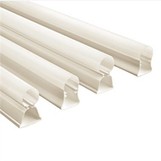
Extruded lenses are produced through an extrusion process, which involves forcing a molten plastic material through a die to create a continuous shape with a consistent cross - section. This manufacturing method allows for the production of lenses in various shapes, sizes, and profiles, making them suitable for a wide range of applications, from lighting fixtures to optical devices.
Common materials used in extruded lenses include polycarbonate (PC), acrylic (PMMA), and polyethylene terephthalate (PET). Each material has its own set of properties, including different levels of flexibility.
Factors Affecting the Flexibility of Extruded Lenses
-
Material Selection
- Polycarbonate (PC): PC is known for its high impact resistance and relatively good flexibility. It can withstand bending to a certain degree without cracking. This makes it a popular choice for applications where some flexibility is required, such as in LED Diffuser Strip. The molecular structure of PC allows for some movement of the polymer chains, enabling it to deform under stress.
- Acrylic (PMMA): Acrylic is a rigid material compared to PC. It has lower flexibility and is more prone to cracking when bent. However, it offers excellent optical clarity, which is desirable in many applications. For instance, in Plastic Diffuser Lens, acrylic may be used when a more rigid and clear lens is needed.
- Polyethylene Terephthalate (PET): PET has moderate flexibility. It is often used in applications where a balance between flexibility and other properties, such as chemical resistance and dimensional stability, is required.
-
Thickness of the Lens
- Thicker extruded lenses are generally less flexible than thinner ones. As the thickness increases, the material becomes more resistant to bending forces. For example, a very thin extruded PC lens can be bent into a relatively tight curve, while a thick PC lens of the same material may only tolerate a gentle bend before reaching its limit.
-
Temperature
- Temperature has a significant impact on the flexibility of extruded lenses. At higher temperatures, the polymer chains in the plastic material have more energy and can move more freely, increasing the flexibility of the lens. Conversely, at lower temperatures, the material becomes stiffer and less flexible. For instance, a PC lens that is flexible at room temperature may become brittle and crack easily in a cold environment.
Applications and Flexibility Requirements
- Lighting Applications
- In LED Diffuser Strip applications, flexibility is often crucial. These strips are commonly used in curved or irregularly shaped lighting fixtures. A flexible extruded lens can be easily bent to fit the desired shape, providing uniform light diffusion. For example, in decorative lighting for architectural features with curved surfaces, a flexible PC diffuser strip can be installed without the need for complex cutting or shaping.
- Plastic Diffuser Lens used in general lighting fixtures may not require as much flexibility. In a standard rectangular or square ceiling light, a more rigid acrylic lens can be used to provide clear and stable light distribution.
- Optical Devices
- Some optical devices, such as flexible displays or certain types of sensors, may require flexible extruded lenses. The flexibility allows the lens to conform to the shape of the device or to adapt to different operating conditions. However, in precision optical instruments where high accuracy is required, a more rigid lens material may be preferred to maintain the optical properties.
- Lampshades
- Lampshade PC Diffuser can benefit from flexibility, especially in lamps with non - traditional shapes. A flexible PC diffuser can be shaped into various forms, such as cones or cylinders, to create unique lighting effects.
Testing the Flexibility of Extruded Lenses
As a supplier, we conduct various tests to determine the flexibility of our extruded lenses. One common test is the bend test, where a sample of the lens is gradually bent until it either reaches a specified angle or shows signs of damage, such as cracking or delamination. We also test the lenses at different temperatures to understand how the flexibility changes under various environmental conditions.
These tests help us ensure that our products meet the specific flexibility requirements of our clients. For example, if a client needs a flexible lens for a curved lighting installation, we can provide a lens that has been tested to withstand the required degree of bending without failure.
Conclusion
In conclusion, whether extruded lenses are flexible depends on several factors, including the material used, the thickness of the lens, and the temperature. While some materials like PC offer good flexibility, others like acrylic are more rigid. The flexibility requirements vary depending on the application, with lighting and some optical devices often demanding flexible lenses.
As a leading supplier of extruded lenses, we have the expertise and resources to provide products that meet a wide range of flexibility needs. If you are in the market for extruded lenses and have specific flexibility requirements, we encourage you to contact us for a detailed discussion. Our team of experts can help you select the right material, thickness, and design to ensure that your project is a success.


References
- Smith, J. (2018). "Plastic Materials for Optical Applications." Journal of Plastic Science, 25(3), 123 - 135.
- Johnson, A. (2019). "Extrusion Process and Properties of Plastic Lenses." Proceedings of the International Conference on Plastic Manufacturing, 45 - 52.
- Brown, K. (2020). "Flexibility and Durability of Extruded Plastic Products." Industrial Plastic Review, 32(2), 78 - 85.