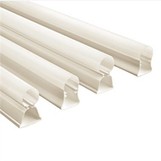

As a supplier of Triproof Light Covers, one of the most frequently asked questions I encounter is whether there are any quality standards for these covers. The short answer is yes, and in this blog post, I'll delve into the details of these standards and why they matter for both manufacturers and end-users.
Understanding Triproof Light Covers
Before we explore the quality standards, let's briefly understand what Triproof Light Covers are. Triproof lights are designed to be waterproof, dustproof, and corrosion-resistant, making them ideal for harsh environments such as industrial facilities, warehouses, car parks, and outdoor areas. The covers play a crucial role in protecting the internal components of the lights from these elements, ensuring their longevity and performance.
Key Quality Standards for Triproof Light Covers
Material Quality
The material used in Triproof Light Covers is of utmost importance. High-quality covers are typically made from polycarbonate (PC) or acrylic materials. Polycarbonate is a popular choice due to its excellent impact resistance, high light transmission, and good weatherability. It can withstand extreme temperatures and is less likely to crack or break under stress. Acrylic, on the other hand, offers superior optical clarity, making it a great option for applications where high-quality lighting is required.
When sourcing Triproof Light Covers, it's essential to ensure that the material meets relevant industry standards. For example, the material should have a high UL94 flammability rating, indicating its resistance to fire. Additionally, it should be UV-stabilized to prevent yellowing and degradation when exposed to sunlight.
Structural Integrity
The structural integrity of Triproof Light Covers is another critical factor. The covers should be designed to fit snugly over the light fixture, providing a tight seal to prevent water, dust, and other contaminants from entering. They should also be able to withstand mechanical stress, such as vibrations and impacts, without losing their shape or functionality.
To ensure structural integrity, manufacturers often use advanced manufacturing techniques, such as extrusion or injection molding. These processes allow for precise control over the dimensions and thickness of the covers, ensuring consistent quality across production batches. Additionally, the covers may be reinforced with ribs or other structural elements to enhance their strength.
Optical Performance
The optical performance of Triproof Light Covers is crucial for ensuring efficient and effective lighting. The covers should have a high light transmission rate, allowing as much light as possible to pass through while minimizing glare and light loss. They should also be able to diffuse the light evenly, providing uniform illumination across the area.
To achieve optimal optical performance, manufacturers may use special coatings or treatments on the surface of the covers. For example, anti-glare coatings can reduce reflections and improve visibility, while light-diffusing additives can scatter the light and create a more even distribution.
Environmental Resistance
As mentioned earlier, Triproof Light Covers are designed to be used in harsh environments, so they must be resistant to environmental factors such as water, dust, and chemicals. The covers should be waterproof to IPX ratings, which indicate their level of protection against water ingress. For example, an IPX5 rating means that the cover is protected against low-pressure water jets from any direction.
In addition to water resistance, the covers should also be dustproof to IP ratings. An IP6X rating indicates that the cover is completely dust-tight, preventing any dust from entering the light fixture. Furthermore, the covers should be resistant to chemicals commonly found in industrial environments, such as acids, alkalis, and solvents.
Importance of Quality Standards
Adhering to quality standards is essential for both manufacturers and end-users of Triproof Light Covers. For manufacturers, it ensures that their products meet the expectations of customers and comply with relevant regulations. This can help build a positive reputation in the market and increase customer loyalty.
For end-users, using high-quality Triproof Light Covers can result in significant benefits. These covers can help extend the lifespan of the light fixtures, reducing the need for frequent replacements and maintenance. They can also improve the safety and reliability of the lighting system, especially in hazardous environments. Additionally, high-quality covers can enhance the overall performance of the lights, providing better illumination and energy efficiency.
Our Product Offerings
At our company, we are committed to providing high-quality Triproof Light Covers that meet the strictest quality standards. We offer a wide range of products, including Custom Waterproof Tri-proof Diffuser PC LED Light Cover, Plastic Tri Proof Light, and Tri Proof Light LED Cover.
Our covers are made from premium-grade polycarbonate or acrylic materials, ensuring excellent impact resistance, optical performance, and environmental resistance. We use advanced manufacturing techniques to ensure precise dimensions and consistent quality across all our products. Additionally, our covers are rigorously tested to meet or exceed industry standards, giving you peace of mind knowing that you're getting a reliable and high-quality product.


Conclusion
In conclusion, there are indeed quality standards for Triproof Light Covers, and these standards play a crucial role in ensuring the performance, reliability, and safety of these products. When choosing Triproof Light Covers, it's important to consider factors such as material quality, structural integrity, optical performance, and environmental resistance. By selecting high-quality covers that meet the relevant standards, you can ensure that your lighting system operates efficiently and effectively in even the harshest environments.
If you're interested in learning more about our Triproof Light Covers or would like to discuss your specific requirements, please don't hesitate to contact us. We're here to help you find the perfect solution for your lighting needs.
References
- Industry standards for lighting fixtures and components
- Technical specifications of polycarbonate and acrylic materials
- Research studies on the performance of Triproof Light Covers in different environments