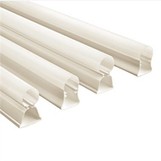

Hey there! I'm a supplier of Extruded Linear Lenses, and today I wanna chat about whether an extruded linear lens can be used in aviation lighting. It's a super interesting topic, and there's a lot to dig into.


First off, let's talk about what an extruded linear lens is. An Extruded Linear Lens is a type of lens that's made through an extrusion process. This process allows for the creation of long, linear lenses with consistent cross - sections. They're usually made from plastics like polycarbonate or acrylic, which offer great optical properties and are relatively lightweight.
Now, when it comes to aviation lighting, there are some really strict requirements. Aviation lights need to be highly visible from long distances, have specific beam patterns, and be able to withstand harsh environmental conditions. For example, they need to work in extreme temperatures, high altitudes, and be resistant to vibrations and impacts.
One of the big advantages of using an extruded linear lens in aviation lighting is its optical performance. These lenses can be designed to control the light distribution precisely. We can shape the lens in such a way that it focuses the light in a specific direction or spreads it out evenly, depending on the requirements of the aviation light. For runway edge lights, we might want a lens that spreads the light horizontally to create a clear visual guide for pilots during takeoff and landing.
Another plus is the material properties. As I mentioned earlier, extruded linear lenses are often made from plastics. Polycarbonate, for instance, is known for its high impact resistance. This is crucial in aviation, where lights are exposed to all sorts of potential hazards, like debris from runway operations or bird strikes. Acrylic, on the other hand, offers excellent optical clarity, which means the light can shine through with minimal loss of intensity.
Let's also consider the weight factor. Aviation is all about reducing weight to improve fuel efficiency and performance. Extruded linear lenses are much lighter than traditional glass lenses. This weight reduction can have a significant impact, especially when you're talking about a large number of lights on an aircraft or an airport runway.
However, there are also some challenges. One of the main concerns is the durability in the long - term. Although plastics are generally tough, they can be affected by UV radiation over time. In aviation, lights are often exposed to direct sunlight for long periods, and UV rays can cause the plastic to become brittle and yellow, which will affect the light output. To address this, we can use special UV - resistant coatings on the lenses.
Another issue is the heat resistance. Aviation lights can generate a fair amount of heat, especially those using high - intensity bulbs. The lens needs to be able to withstand this heat without deforming or losing its optical properties. Some advanced plastics can handle high temperatures, but we need to make sure the design and material selection are appropriate for the specific application.
Now, let's look at some specific applications of extruded linear lenses in aviation lighting. In airport runway lighting, they can be used in runway edge lights, taxiway lights, and approach lights. These lights need to be highly visible and have a consistent light pattern. An extruded linear lens can be customized to meet these requirements, ensuring that pilots have a clear and accurate visual guide.
On aircraft, extruded linear lenses can be used in navigation lights, anti - collision lights, and interior lighting. Navigation lights need to be visible from a distance and have specific color and beam patterns. An extruded linear lens can help achieve these specifications, while also being lightweight and durable.
When it comes to anti - collision lights, which are crucial for aircraft safety, the lens needs to distribute the light in a way that makes the aircraft highly visible from all angles. The extrusion process allows us to create complex lens shapes that can achieve this kind of omnidirectional light distribution.
In interior lighting, extruded linear lenses can be used in cabin lights and instrument panel lights. They can provide a soft, even light that's comfortable for passengers and pilots. And because they're lightweight, they don't add much extra weight to the aircraft.
If you're in the aviation industry and looking for a reliable lighting solution, Extruded Linear Lenses could be a great option. We also offer other related products like Plastic Diffuser Lens and Lampshade PC Diffuser, which can complement the lighting system and enhance the overall performance.
We have a team of experts who can work with you to design and customize the lenses according to your specific needs. Whether you need a unique beam pattern, a specific color, or a lens that can withstand extreme conditions, we've got you covered.
If you're interested in learning more about our products or have any questions regarding the use of extruded linear lenses in aviation lighting, don't hesitate to reach out. We're always happy to have a chat and discuss how we can help you with your lighting requirements.
References:
- Aviation Lighting Handbook, Federal Aviation Administration
- Optical Properties of Plastics for Lighting Applications, Journal of Optical Engineering
So, if you're in the market for high - quality extruded linear lenses for aviation lighting, get in touch, and let's start a conversation about your project!