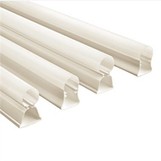

As a dedicated supplier of lamp cover plastic, I often encounter a common question from our clients and potential customers: "Can lamp cover plastic be used in a wall lamp?" In this blog, I will delve into this topic, exploring the feasibility, benefits, and considerations when using lamp cover plastic for wall lamps.
Feasibility of Using Lamp Cover Plastic in Wall Lamps
The short answer is yes, lamp cover plastic can indeed be used in wall lamps. In fact, it has become a popular choice in the lighting industry for several reasons. Plastic materials offer a wide range of properties that make them suitable for wall lamp applications.
One of the primary advantages of plastic is its versatility. It can be easily molded into various shapes and sizes, allowing for creative and unique wall lamp designs. Whether you're looking for a sleek, modern look or a more traditional style, plastic can be customized to meet your aesthetic requirements. Additionally, plastic can be manufactured with different levels of transparency or opaqueness, which is crucial for controlling the light output and diffusion in a wall lamp.
Another key benefit of using plastic for wall lamp covers is its durability. High - quality lamp cover plastics are resistant to impact, scratches, and fading, ensuring that the wall lamp maintains its appearance and functionality over time. This is especially important for wall lamps, which are often exposed to daily wear and tear in both residential and commercial settings.
Types of Lamp Cover Plastic Suitable for Wall Lamps
There are several types of plastic materials commonly used for lamp covers, each with its own set of properties and advantages.
Polycarbonate
Polycarbonate is a popular choice for lamp cover plastic due to its high impact resistance and optical clarity. It can withstand significant force without breaking, making it ideal for wall lamps that may be subject to accidental bumps or knocks. Polycarbonate also has excellent light transmission properties, allowing for efficient and even distribution of light. It can be further enhanced with additives to improve its UV resistance, ensuring that it doesn't yellow or degrade when exposed to sunlight.
Acrylic
Acrylic, also known as PMMA (polymethyl methacrylate), is another widely used plastic for lamp covers. It offers good optical clarity, similar to glass, but at a much lower weight and cost. Acrylic can be easily machined, thermoformed, or polished to achieve a smooth and glossy finish, making it a great option for creating stylish wall lamp designs. It also has good weather resistance, which is beneficial for wall lamps installed outdoors or in areas with high humidity.
PVC
PVC (polyvinyl chloride) is a cost - effective plastic material that is often used for lamp covers. It has good chemical resistance and can be formulated to have different levels of flexibility and hardness. PVC lamp covers can be produced in a variety of colors and textures, providing a wide range of design options for wall lamps. However, it may not have the same level of impact resistance or optical clarity as polycarbonate or acrylic.
Considerations When Using Lamp Cover Plastic in Wall Lamps
While lamp cover plastic offers many advantages for wall lamps, there are also some considerations that need to be taken into account.
Heat Resistance
Wall lamps generate heat, especially those with incandescent or halogen bulbs. It is essential to choose a lamp cover plastic that can withstand the heat generated by the light source without warping or melting. Polycarbonate and some high - temperature - resistant acrylics are good choices for applications where heat is a concern.
Fire Resistance
Fire safety is a critical factor when it comes to lighting fixtures. Lamp cover plastics should meet relevant fire safety standards, such as UL 94 ratings. Many lamp cover plastics can be treated with fire - retardant additives to improve their fire resistance, reducing the risk of fire in case of an electrical malfunction or overheating.


Compatibility with the Light Source
The type of light source used in the wall lamp can also affect the performance of the lamp cover plastic. LED lights, for example, produce less heat than traditional incandescent bulbs, which may allow for a wider range of plastic materials to be used. However, some plastics may interact with the light spectrum of certain LEDs, causing color shifts or reduced light output. It is important to test the compatibility of the lamp cover plastic with the specific light source before finalizing the design.
Our Product Offerings
As a leading supplier of lamp cover plastic, we offer a wide range of products that are suitable for wall lamps. Our T8 Tube Plastic Cover is a popular choice for linear wall lamp designs. It is made from high - quality plastic materials that provide excellent light diffusion and protection for the T8 tubes.
Our LED Light Plastic Cover is specifically designed for LED wall lamps. It is available in various shapes and sizes, and can be customized to meet the unique requirements of your lighting design. The plastic cover is engineered to enhance the performance of the LEDs, ensuring efficient light output and a long lifespan.
We also offer Plastic Transparent Tube products that can be used for creating innovative wall lamp designs. These tubes are made from transparent plastics with high optical clarity, allowing for a beautiful and unique lighting effect.
Conclusion
In conclusion, lamp cover plastic can be an excellent choice for wall lamps. It offers versatility, durability, and a wide range of design options, making it suitable for both residential and commercial applications. However, it is important to consider factors such as heat resistance, fire resistance, and compatibility with the light source when selecting the right plastic material for your wall lamp.
If you are interested in our lamp cover plastic products for your wall lamp projects, we invite you to contact us for more information and to discuss your specific requirements. Our team of experts is ready to assist you in choosing the best plastic material and design for your wall lamps.
References
- "Plastics for Lighting Applications" by The Society of Plastics Engineers
- "Lighting Design Handbook" by John E. Crispin
- Technical datasheets from plastic material manufacturers.