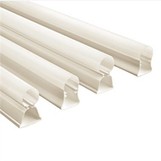

In the realm of construction, the choice of materials is a critical decision that can significantly impact the success and longevity of a project. One material that has been gaining increasing attention in recent years is Modified Acrylonitrile Butadiene Styrene (Modified ABS). As a supplier of Modified ABS, I am frequently asked whether this versatile material can be used in construction applications. In this blog post, I will explore the properties of Modified ABS, its potential uses in construction, and the benefits it offers compared to traditional construction materials.
Understanding Modified ABS
Before delving into its construction applications, it's essential to understand what Modified ABS is. ABS is a common thermoplastic polymer known for its toughness, impact resistance, and ease of processing. Modified ABS takes these inherent properties and enhances them through various modification techniques, such as adding additives, fillers, or reinforcements. This results in a material that can be tailored to meet specific performance requirements.
There are several types of Modified ABS available, each with its own unique characteristics. For instance, Electroplating Grade ABS is designed to have excellent adhesion to metal coatings, making it suitable for applications where a metallic finish is desired. General Grade ABS offers a good balance of mechanical properties and is often used in a wide range of general-purpose applications. Weather Resistant ABS is formulated to withstand the harsh effects of sunlight, moisture, and temperature variations, making it ideal for outdoor applications.
Properties of Modified ABS
One of the key advantages of Modified ABS is its excellent mechanical properties. It has high impact strength, which means it can withstand sudden blows and shocks without cracking or breaking. This makes it a suitable choice for construction applications where durability is essential, such as in the manufacturing of building components that may be subject to physical impact.
In addition to its impact resistance, Modified ABS also has good stiffness and dimensional stability. It maintains its shape and size under different environmental conditions, which is crucial for ensuring the proper fit and function of construction parts. This property is particularly important in applications where precision is required, such as in the production of architectural models or custom-made building fixtures.
Another notable property of Modified ABS is its chemical resistance. It is resistant to a wide range of chemicals, including acids, alkalis, and solvents. This makes it suitable for use in construction environments where exposure to chemicals is possible, such as in laboratories, chemical storage facilities, or industrial buildings.
Potential Construction Applications of Modified ABS
Modified ABS has a wide range of potential applications in the construction industry. Here are some of the most common uses:
Interior Design Elements
Modified ABS can be used to create a variety of interior design elements, such as wall panels, ceiling tiles, and decorative moldings. Its ability to be easily molded into different shapes and sizes allows for the creation of unique and aesthetically pleasing designs. Additionally, its good surface finish and colorability make it possible to achieve a wide range of visual effects, from high-gloss to matte finishes.
Electrical Enclosures
In the construction of buildings, there is a need for electrical enclosures to protect electrical components from dust, moisture, and physical damage. Modified ABS is an ideal material for this application due to its electrical insulation properties, impact resistance, and ease of processing. It can be molded into complex shapes to accommodate different types of electrical equipment, and its chemical resistance ensures long-term durability in harsh electrical environments.
Plumbing Fixtures
Modified ABS can also be used in the manufacturing of plumbing fixtures, such as pipes, fittings, and valves. Its smooth surface finish reduces friction and allows for efficient water flow, while its chemical resistance makes it resistant to corrosion and scaling. Additionally, its impact resistance ensures that the fixtures can withstand the rigors of daily use without cracking or breaking.
Exterior Building Components
For outdoor construction applications, Weather Resistant ABS is an excellent choice. It can be used to manufacture exterior building components, such as window frames, door frames, and siding. Its ability to withstand UV radiation, moisture, and temperature variations ensures that these components maintain their appearance and performance over time.
Benefits of Using Modified ABS in Construction
There are several benefits to using Modified ABS in construction applications compared to traditional construction materials.
Cost-Effectiveness
Modified ABS is generally more cost-effective than many traditional construction materials, such as metal or wood. It has a lower raw material cost and can be processed more efficiently, resulting in lower manufacturing costs. Additionally, its long lifespan and low maintenance requirements reduce the overall cost of ownership over the life of the construction project.
Design Flexibility
As mentioned earlier, Modified ABS can be easily molded into different shapes and sizes, allowing for greater design flexibility. This means that architects and designers can create unique and innovative building designs that would be difficult or impossible to achieve with traditional materials.
Environmental Sustainability
Modified ABS is a recyclable material, which makes it a more environmentally sustainable choice compared to some traditional construction materials. Recycling helps to reduce waste and conserve natural resources, making it an attractive option for construction projects that aim to meet sustainability goals.
Ease of Installation
Modified ABS components are typically lightweight and easy to handle, which makes them easier to install compared to heavier traditional materials. This can result in shorter installation times and lower labor costs, making it a more efficient choice for construction projects.
Considerations and Limitations
While Modified ABS offers many advantages for construction applications, there are also some considerations and limitations to keep in mind.
Temperature Resistance
Modified ABS has a relatively low melting point compared to some other construction materials, such as metal or ceramic. This means that it may not be suitable for applications where high temperatures are involved, such as in close proximity to heating elements or in fire-prone areas.
Flammability
Although Modified ABS can be formulated to have improved fire resistance, it is still a combustible material. In construction applications where fire safety is a concern, it is important to ensure that the Modified ABS used meets the relevant fire safety standards and regulations.

Compatibility with Other Materials
When using Modified ABS in construction, it is important to consider its compatibility with other materials that may be used in the same project. For example, some chemicals or adhesives may react with Modified ABS, causing damage or degradation. It is essential to conduct compatibility tests before using Modified ABS in combination with other materials.
Conclusion
In conclusion, Modified ABS has significant potential for use in construction applications. Its excellent mechanical properties, chemical resistance, design flexibility, and cost-effectiveness make it a viable alternative to traditional construction materials in many cases. However, it is important to carefully consider its limitations and ensure that it is used in appropriate applications.

As a supplier of Modified ABS, I am committed to providing high-quality products that meet the specific needs of the construction industry. If you are interested in exploring the use of Modified ABS in your construction projects, I encourage you to contact me to discuss your requirements and learn more about how Modified ABS can benefit your project. Let's work together to build a better future with innovative and sustainable construction materials.
References
- "Engineering Plastics Handbook" by Reinhold B. Seymour and Charles E. Carraher Jr.
- "Plastics in Construction" by A. J. Kinloch and R. J. Young.
- Technical data sheets provided by Modified ABS manufacturers.