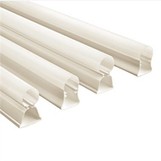

As a supplier of T8 LED fixture covers, I often encounter questions from customers regarding the recyclability of these products. In this blog, I'll delve into the topic of whether T8 LED fixture covers can be recycled, exploring the materials used, the recycling process, and the environmental impact.
Materials Used in T8 LED Fixture Covers
T8 LED fixture covers are typically made from various types of plastics, with polycarbonate (PC) and acrylic being two of the most common materials.
Polycarbonate is a strong, durable plastic known for its high impact resistance and optical clarity. It can withstand harsh environmental conditions and is often used in applications where safety and durability are paramount. Acrylic, on the other hand, is a lightweight, transparent plastic that offers excellent optical properties and weather resistance. It is commonly used in lighting fixtures due to its ability to diffuse light evenly.
Both polycarbonate and acrylic are thermoplastics, which means they can be melted and reshaped multiple times without losing their essential properties. This characteristic makes them potentially recyclable materials.
The Recycling Process for T8 LED Fixture Covers
The recycling process for T8 LED fixture covers involves several steps:
Collection
The first step in the recycling process is the collection of used T8 LED fixture covers. This can be done through various channels, such as recycling programs offered by local municipalities, manufacturers' take-back programs, or private recycling companies.
Sorting
Once the used fixture covers are collected, they are sorted based on the type of plastic they are made of. This is an important step because different plastics have different melting points and properties, and mixing them together can contaminate the recycling process.
Cleaning
After sorting, the fixture covers are cleaned to remove any dirt, debris, or other contaminants. This is typically done using a combination of water, detergents, and mechanical agitation.
Shredding
The cleaned fixture covers are then shredded into small pieces. This increases the surface area of the plastic, making it easier to melt and process.
Melting and Reprocessing
The shredded plastic pieces are melted in a specialized recycling machine. The molten plastic is then filtered to remove any remaining impurities and shaped into pellets or other forms that can be used to manufacture new products.
Manufacturing
The recycled plastic pellets are used as raw materials in the manufacturing of new products, such as new T8 LED fixture covers, other plastic products, or even non-plastic products that incorporate recycled plastic components.
Challenges in Recycling T8 LED Fixture Covers
While T8 LED fixture covers are made from potentially recyclable materials, there are several challenges that can make the recycling process more difficult:
Contamination
One of the biggest challenges in recycling T8 LED fixture covers is contamination. The covers may be contaminated with other materials, such as metal components, adhesives, or coatings, which can make it difficult to separate and recycle the plastic.
Lack of Infrastructure
Another challenge is the lack of infrastructure for recycling T8 LED fixture covers. In many areas, there may not be enough recycling facilities or programs to handle the large volume of used fixture covers. This can make it difficult for consumers and businesses to recycle their used covers.
Cost
Recycling T8 LED fixture covers can also be more expensive than producing new covers from virgin materials. This is due to the cost of collection, sorting, cleaning, and reprocessing the used covers. As a result, some manufacturers may be reluctant to invest in recycling programs.
Environmental Impact of Recycling T8 LED Fixture Covers
Despite the challenges, recycling T8 LED fixture covers can have several environmental benefits:
Conservation of Resources
Recycling T8 LED fixture covers helps to conserve natural resources by reducing the demand for virgin plastic. This can help to reduce the environmental impact of plastic production, which includes the extraction of fossil fuels and the release of greenhouse gases.
Reduction of Waste
Recycling T8 LED fixture covers also helps to reduce the amount of waste that ends up in landfills. Plastic waste can take hundreds of years to decompose, and it can have a negative impact on the environment by releasing harmful chemicals and pollutants.
Energy Savings
Recycling T8 LED fixture covers can also save energy compared to producing new covers from virgin materials. The recycling process typically requires less energy than the production of new plastic, which can help to reduce greenhouse gas emissions and combat climate change.
Conclusion
In conclusion, T8 LED fixture covers can be recycled, but there are several challenges that need to be addressed in order to make the recycling process more efficient and cost-effective. As a supplier of T8 LED fixture covers, I am committed to promoting sustainable practices and reducing the environmental impact of our products. We offer a take-back program for used fixture covers, and we work with recycling partners to ensure that the covers are recycled in an environmentally responsible manner.
If you are interested in purchasing high-quality T8 LED fixture covers or learning more about our recycling program, please visit our website at T8 Light Fixture Cover. We also offer a range of other lighting products, such as T5 Light Fixture Plastic Cover and LED Light Fixture Housing.
Contact us today to discuss your lighting needs and how we can help you achieve your sustainability goals.


References
- American Chemistry Council. (n.d.). Plastic Recycling. Retrieved from [Website URL]
- Environmental Protection Agency. (n.d.). Recycling Basics. Retrieved from [Website URL]
- Plastics Industry Association. (n.d.). Plastic Recycling: How It Works. Retrieved from [Website URL]