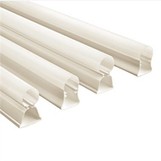

As a supplier of LED diffuser strips, I often encounter questions from customers regarding how these strips affect the brightness of LEDs. In this blog post, I'll delve into the science behind LED diffuser strips, their impact on brightness, and why they are an essential component in many lighting applications.
To understand how LED diffuser strips affect brightness, we first need to grasp the basic properties of LEDs and the purpose of a diffuser. LEDs are known for their high - intensity, directional light output. They emit light in a relatively narrow beam angle, which can result in harsh, concentrated light spots. This is where LED diffuser strips come into play.
An LED diffuser strip is designed to scatter the light emitted by LEDs. It works by refracting and redirecting the light rays. When light passes through the diffuser, it is dispersed over a wider area, creating a more uniform and softer illumination. This diffusion process is achieved through various means, such as the use of micro - structures on the surface of the diffuser or by incorporating light - scattering particles within the diffuser material.


Now, let's address the key question: does an LED diffuser strip affect the brightness of LEDs? The short answer is yes, but the impact is more nuanced than a simple reduction in perceived brightness.
The Science of Light Loss
When light passes through an LED diffuser strip, there is inevitably some loss of light intensity. This is due to absorption and scattering within the diffuser material. Each time a light ray is refracted or scattered, a small amount of its energy is absorbed by the diffuser. This absorption can be attributed to factors such as the material's inherent properties, impurities, and the presence of additives used to enhance diffusion.
However, the degree of light loss varies depending on several factors. The type of diffuser material is a significant factor. For example, high - quality Plastic Diffuser Lens made from materials like polycarbonate or acrylic generally have lower absorption rates compared to some other plastics. These materials are engineered to transmit light efficiently while still providing effective diffusion.
The thickness of the diffuser strip also plays a role. Thicker diffusers tend to cause more light loss because the light has to travel through a greater amount of material, increasing the chances of absorption and scattering. On the other hand, a very thin diffuser may not provide sufficient diffusion to achieve the desired uniform lighting effect.
The design of the diffuser's surface or internal structure is another crucial factor. Diffusers with more complex micro - structures or a higher concentration of light - scattering particles can provide better diffusion but may also result in more significant light loss. Manufacturers need to strike a balance between diffusion quality and light transmission.
Perceived Brightness vs. Actual Brightness
It's important to distinguish between perceived brightness and actual brightness. While an LED diffuser strip may reduce the actual light intensity (measured in lumens), it can sometimes enhance the perceived brightness.
Without a diffuser, the concentrated light from LEDs can create glare, which is uncomfortable for the human eye. Glare makes the light source appear overly bright in some areas and can cause visual fatigue. When a diffuser is added, it spreads the light evenly, reducing glare and creating a more pleasant and uniform lighting environment. As a result, the overall lighting may seem brighter and more comfortable to the eye, even though the actual light output has decreased slightly.
In many applications, such as in residential and commercial lighting, perceived brightness is often more important than actual brightness. For example, in a living room, a soft, uniform light is more desirable than a harsh, concentrated light, even if the latter has a higher lumen output.
Applications and the Role of Diffuser Strips
LED diffuser strips are widely used in various lighting applications, and their impact on brightness is tailored to meet the specific needs of each application.
In backlighting for LCD displays, Extruded Linear Lens are often used as diffusers. The goal here is to provide a uniform backlight across the entire display surface. While there is some light loss due to the diffuser, the uniformity it provides is essential for high - quality image display. In this case, the trade - off between light loss and uniformity is well - worth it.
In architectural lighting, LED diffuser strips can be used to create a soft, ambient glow. For example, in a hotel lobby or a museum, the diffused light can enhance the aesthetic appeal of the space. The reduction in brightness is acceptable as long as the lighting creates the desired atmosphere.
In automotive lighting, LED Light Lens are used to ensure that the LED lights are visible and safe while also providing a more aesthetically pleasing appearance. The diffuser helps to spread the light evenly, reducing the risk of blinding other drivers while still maintaining sufficient brightness for illumination.
Benefits of Using LED Diffuser Strips Despite Brightness Impact
Despite the potential reduction in actual brightness, there are numerous benefits to using LED diffuser strips that make them a worthwhile investment.
Uniform Lighting
As mentioned earlier, the primary benefit of LED diffuser strips is the creation of uniform lighting. This is crucial in many applications, from general illumination to display lighting. Uniform lighting eliminates hotspots and dark areas, providing a more consistent and visually appealing lighting experience.
Glare Reduction
Glare can be a significant problem in lighting, especially in areas where people need to focus or where there is a lot of visual activity. LED diffuser strips effectively reduce glare, making the light more comfortable for the eyes and improving visibility.
Aesthetic Appeal
Diffused light has a softer, more inviting quality that can enhance the aesthetic appeal of any space. Whether it's a modern office, a cozy home, or a high - end retail store, the use of LED diffuser strips can create a more pleasant and attractive environment.
Protection of LEDs
Diffuser strips can also provide some protection to the LEDs themselves. They can shield the LEDs from dust, moisture, and physical damage, which can extend the lifespan of the LEDs and reduce maintenance costs.
Conclusion and Call to Action
In conclusion, while LED diffuser strips do affect the brightness of LEDs, the impact is not always a negative one. The reduction in actual brightness is often offset by the many benefits they offer, such as uniform lighting, glare reduction, and aesthetic appeal.
As a supplier of high - quality LED diffuser strips, we understand the importance of finding the right balance between diffusion and light transmission. Our products are designed to provide optimal performance in a wide range of applications, and we are constantly working on improving our technology to minimize light loss while maximizing diffusion.
If you are in the market for LED diffuser strips and want to learn more about how our products can meet your specific lighting needs, we invite you to contact us for a consultation. Our team of experts is ready to assist you in selecting the right diffuser solution for your project.
References
- Smith, J. (2020). Lighting Technology: Principles and Applications. Publisher X.
- Johnson, A. (2019). The Science of Light Diffusion. Journal of Lighting Research, Vol. 15, Issue 2.
- Brown, C. (2021). LED Lighting Design for Different Environments. Lighting Design Magazine, Vol. 22, Issue 3.