
Hey there! I'm a supplier of LED Aluminum Profile, and I often get asked by customers, "How do I measure the size of LED aluminum profiles I need?" Well, in this blog, I'm gonna break it down for you in a super easy - peasy way.
Why Measuring LED Aluminum Profiles is Crucial
First off, why does it matter? Getting the right size of your LED Aluminum Extrusion is like finding the perfect pair of shoes. If it's too big, it won't fit right, and if it's too small, well, it just won't work at all. A properly sized profile ensures that your LED strips fit snugly, providing optimal heat dissipation, which in turn extends the lifespan of your LEDs. It also affects the overall look of your lighting installation. So, nailing the measurements is a big deal.
Understanding the Key Dimensions
There are a few key dimensions you need to consider when measuring for LED Strip Aluminum Profile.
Width
The width of the profile is probably the most obvious dimension. You want to make sure it's wide enough to accommodate your LED strip. Most common LED strips are around 8mm - 12mm wide, but there are also wider ones. Measure the width of your LED strip precisely using a ruler or caliper. When choosing a profile, go for one that's slightly wider than the LED strip. This gives a little bit of breathing room and makes it easier to install the strip. For example, if your LED strip is 10mm wide, a profile with a width of 12mm - 14mm would be a good choice.
Height
The height of the profile matters too, especially if you're using a diffuser or a cover. The height needs to be sufficient to hold the LED strip and any additional components like a diffuser. If you're using a simple, flat diffuser, you can usually get away with a lower - height profile. But if you have a thicker, more complex diffuser, you'll need a taller profile. Measure the height of your LED strip and add the thickness of the diffuser (if applicable) to get the minimum height you need for the profile.
Length
The length of the profile is pretty straightforward. Measure the area where you want to install the LED lighting. If it's a straight run, just measure the length of the space. But if it's a curved or irregular area, you might need to use a flexible measuring tape. It's a good idea to add a little extra length, say 5 - 10cm, to account for any cutting errors or adjustments.
Special Considerations
Mounting Space
Don't forget about the mounting space. If you're going to mount the profile on a wall or a surface, you need to make sure there's enough space for the mounting brackets or clips. Some profiles come with built - in mounting options, while others require separate brackets. Measure the space available for mounting and choose a profile that fits those requirements.
End Caps
End caps are used to close the ends of the profile, giving it a finished look and protecting the LED strip. When measuring, consider the thickness of the end caps. They can add a few millimeters to the overall length of the profile. So, if you're working with a tight space, factor this in.
Measuring for Different Applications
Residential Lighting
In a home setting, you might be using LED lighting for things like under - cabinet lighting, cove lighting, or accent lighting. For under - cabinet lighting, measure the length of the cabinet where you want to install the profile. Make sure the width and height are suitable for the LED strip and any diffuser you plan to use. Cove lighting usually requires a longer, continuous profile, so measure the entire length of the cove accurately.
Commercial Lighting
Commercial applications, such as in shops or offices, often require more precise measurements. For display cases, measure the exact dimensions of the case where the LED lighting will be installed. In large - scale installations like warehouses, you might need to measure multiple sections and plan how to connect the profiles.
Tools for Measuring
Ruler or Tape Measure
A simple ruler or tape measure is your best friend when it comes to measuring the basic dimensions of the profile. A metal ruler is more accurate for smaller measurements, while a tape measure is great for longer lengths.

Caliper
For more precise measurements, especially when dealing with thin LED strips or small components, a caliper is a must - have. It can measure the width and thickness of the LED strip with high accuracy.
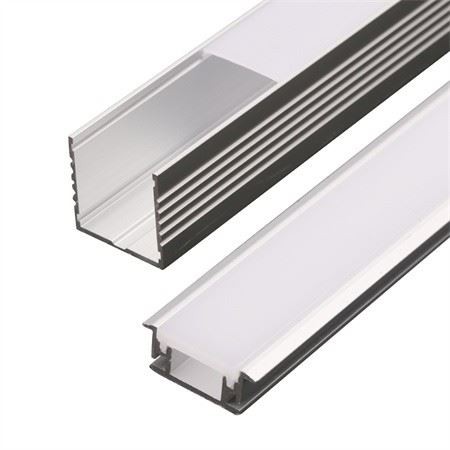
Step - by - Step Measuring Guide
- Gather Your Tools: Get your ruler, tape measure, and caliper ready.
- Measure the LED Strip: Use the caliper to measure the width and height of the LED strip. Write down these measurements.
- Measure the Installation Area: Measure the length of the area where you want to install the profile. If it's a curved area, use a flexible tape measure.
- Consider Additional Components: If you're using a diffuser, end caps, or mounting brackets, measure their dimensions as well.
- Choose the Right Profile: Based on your measurements, select a LED Aluminum Profile that matches your requirements.
Mistakes to Avoid
- Not Accounting for Tolerances: Every manufacturing process has a small tolerance. When choosing a profile, make sure to account for this. A profile that's supposed to be 12mm wide might actually be 11.8mm - 12.2mm.
- Ignoring the End Caps: As mentioned earlier, end caps can add to the overall length. Don't forget to factor them in when measuring.
- Rushing the Measurement: Take your time to measure accurately. A small measurement error can lead to a big headache later on.
Conclusion
Measuring the size of the LED Aluminum Extrusion you need isn't rocket science, but it does require a bit of attention to detail. By following the steps and tips I've shared in this blog, you'll be able to get the perfect - sized profile for your LED lighting project.
If you're in the market for high - quality LED Strip Aluminum Profile, I'm here to help. Whether you have a small residential project or a large commercial installation, we've got a wide range of profiles to suit your needs. Don't hesitate to reach out for a consultation or to discuss your specific requirements. Let's work together to make your lighting project a success!
References
- General knowledge in the LED lighting and aluminum extrusion industry.
- Experience from working with various LED lighting projects.