

Designing custom extruded aluminium profiles can be a game - changer for many industries. As an extruded aluminium supplier, I've seen firsthand how a well - designed custom profile can meet specific needs that off - the - shelf products simply can't. In this blog, I'll walk you through the process of designing these custom profiles, sharing tips and insights based on my experience.
Understanding Your Needs
The first step in designing custom extruded aluminium profiles is to clearly understand what you need. Are you looking for a profile for architectural purposes, like window frames or curtain walls? Maybe it's for industrial machinery, or perhaps you're in the lighting industry and need something like an LED Aluminum Profile.
Think about the function of the profile. What loads will it need to bear? Does it need to be corrosion - resistant? How important is its aesthetic appearance? These questions will help you define the basic requirements of your custom profile. For example, if you're designing a profile for outdoor use, corrosion resistance will be a top priority. You might choose an aluminium alloy with high levels of magnesium and silicon, which are known for their good corrosion - resistant properties.
Material Selection
Once you've defined your needs, it's time to select the right aluminium alloy. There are many different alloys available, each with its own set of properties. The most common alloys used in extrusion are the 6000 series, such as 6061 and 6063.
6061 aluminium alloy is a general - purpose alloy with good strength, corrosion resistance, and weldability. It's often used in structural applications, like automotive parts and aerospace components. On the other hand, 6063 alloy is known for its excellent surface finish and is commonly used in architectural applications, like door and window frames.
As a supplier, I can help you choose the best alloy based on your specific requirements. We have a wide range of alloys in stock, and we can also source special alloys if needed.
Designing the Cross - Section
The cross - section of the extruded aluminium profile is crucial. It determines the profile's strength, stiffness, and functionality. When designing the cross - section, you need to consider the manufacturing process. Aluminium extrusion works by forcing the aluminium alloy through a die with a specific shape. So, the cross - section should be designed in a way that allows for smooth extrusion.
Avoid sharp corners and thin walls, as these can cause problems during the extrusion process. Sharp corners can lead to stress concentrations, which may cause cracks in the profile. Thin walls may not be able to withstand the pressure during extrusion and can result in uneven thickness or even breakage.
You can use computer - aided design (CAD) software to create the cross - section. CAD software allows you to visualize the profile in 3D and make adjustments easily. You can also simulate the extrusion process to check for any potential issues before manufacturing.
Tooling and Die Design
Once you have the cross - section design, the next step is to create the tooling and die. The die is the heart of the extrusion process. It gives the aluminium its shape. Designing a high - quality die is essential for producing consistent and accurate profiles.
The die needs to be made from a high - strength steel that can withstand the high pressure and temperature during extrusion. The surface of the die should be smooth to ensure a good surface finish on the extruded profile.
As an extruded aluminium supplier, we have in - house tooling and die design capabilities. Our experienced engineers can design and manufacture dies to meet your specific requirements. We use advanced machining techniques to ensure the accuracy and quality of the dies.
Extrusion Process
After the die is ready, it's time for the extrusion process. The aluminium alloy is heated to a specific temperature and then forced through the die using a hydraulic press. The extrusion speed, temperature, and pressure need to be carefully controlled to ensure the quality of the profile.
During extrusion, the aluminium alloy takes on the shape of the die. The extruded profile is then cooled rapidly to lock in its shape and properties. After cooling, the profile may undergo additional processes, such as cutting, drilling, or finishing, depending on your requirements.
Finishing and Surface Treatment
Finishing and surface treatment are important steps in the process of designing custom extruded aluminium profiles. They not only enhance the appearance of the profile but also improve its performance and durability.
There are several finishing options available, such as anodizing, powder coating, and painting. Anodizing is a popular choice as it creates a hard, corrosion - resistant oxide layer on the surface of the aluminium. Powder coating provides a durable and attractive finish and is available in a wide range of colors. Painting can also be used to achieve a specific look or to provide additional protection.
Quality Control
Quality control is an essential part of the process. At our company, we have a strict quality control system in place. We use advanced testing equipment to check the dimensions, mechanical properties, and surface finish of the extruded profiles.
We perform dimensional inspections using precision measuring tools, such as calipers and micrometers. We also conduct mechanical tests, like tensile tests and hardness tests, to ensure that the profiles meet the required specifications. Surface finish is inspected visually and using surface roughness measuring instruments.

Cost Considerations
When designing custom extruded aluminium profiles, cost is always a factor. The cost of the profile depends on several factors, including the material, the complexity of the design, the quantity, and the finishing requirements.
As a supplier, we can help you optimize the design to reduce costs without sacrificing quality. For example, we can suggest alternative alloys or simpler cross - section designs that can still meet your needs. We also offer volume discounts, so the more you order, the lower the unit cost will be.
Applications of Custom Extruded Aluminium Profiles
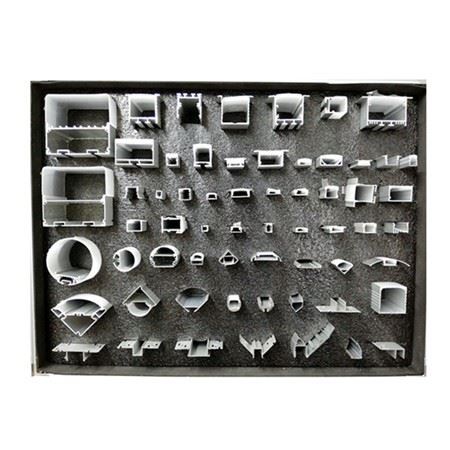
Custom extruded aluminium profiles have a wide range of applications. In the architectural industry, they are used for window frames, curtain walls, handrails, and decorative elements. In the industrial sector, they are used in machinery frames, conveyor systems, and electronic enclosures. And in the lighting industry, Extruded Aluminium Linear Light profiles are very popular for their excellent heat dissipation and aesthetic appeal.
Why Choose Us as Your Supplier
As an extruded aluminium supplier, we have the expertise and experience to help you design and manufacture high - quality custom profiles. We offer a one - stop solution, from material selection and die design to extrusion and finishing.
We have a state - of - the - art manufacturing facility with advanced equipment and a team of skilled workers. Our commitment to quality and customer service is second to none. We work closely with our customers to understand their needs and provide customized solutions.
If you're interested in Extruded Aluminum Profiles or need to design a custom profile, don't hesitate to get in touch with us. We'd love to discuss your project and help you bring your ideas to life. Whether you're a small business or a large corporation, we can provide the support and products you need. Contact us today to start the conversation and explore the possibilities of custom extruded aluminium profiles.
References
- "Aluminium Extrusion Technology" by John P. Carsley
- "The Aluminium Association Handbook"


