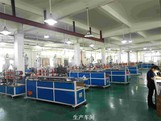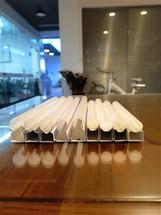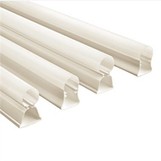

As a reputable extruded aluminium supplier, I understand the critical importance of ensuring the quality of our products. Extruded aluminium is used in a wide range of applications, from construction and automotive to consumer electronics and lighting. In the lighting industry, for instance, Aluminum Profiles For LED Strip Lighting, LED Aluminum Profile, and LED Aluminum Extrusion are highly sought - after products. Testing the quality of extruded aluminium is not only a matter of meeting industry standards but also of satisfying customer expectations and ensuring the long - term performance of the end - products.
Visual Inspection
The first step in testing the quality of extruded aluminium is a visual inspection. This is a simple yet effective method that can quickly identify obvious defects. When I conduct a visual inspection, I look for surface imperfections such as scratches, dents, cracks, and porosity. Scratches can affect the aesthetic appeal of the extruded aluminium and may also weaken the material in the long run. Dents can distort the shape of the profile, making it unsuitable for its intended application. Cracks are particularly concerning as they can propagate under stress, leading to structural failure. Porosity, which appears as small holes on the surface, can reduce the strength and corrosion resistance of the aluminium.
I also pay close attention to the finish of the extruded aluminium. A uniform and smooth finish is a sign of good quality. Any unevenness in the finish, such as streaks or color variations, may indicate problems during the extrusion or finishing process. For example, if the anodizing process is not carried out correctly, the color of the aluminium may not be consistent, and the protective oxide layer may be compromised.
Dimensional Accuracy
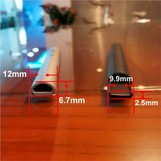
Dimensional accuracy is crucial for extruded aluminium, especially when it is used in precision applications. I use precision measuring tools such as calipers, micrometers, and coordinate measuring machines (CMMs) to ensure that the extruded aluminium profiles meet the specified dimensions. Even a small deviation from the required dimensions can cause fitment issues, affect the functionality of the end - product, and lead to costly rework.
When measuring the dimensions, I check the length, width, thickness, and cross - sectional shape of the extruded profiles. For complex profiles, I may need to use multiple measuring points to ensure that all the critical dimensions are within the tolerance range. In addition to the overall dimensions, I also examine the tolerances of features such as holes, slots, and grooves. These features are often used for assembly or to accommodate other components, and any deviation from the specified tolerances can cause problems during the manufacturing process.
Mechanical Properties Testing
The mechanical properties of extruded aluminium, such as tensile strength, yield strength, and elongation, are essential for determining its suitability for different applications. I conduct mechanical properties testing using a universal testing machine. This machine applies a controlled force to the extruded aluminium specimen until it breaks, allowing me to measure the maximum load it can withstand and the amount of deformation it undergoes before failure.
Tensile strength is the maximum stress that the aluminium can withstand before it breaks under tension. Yield strength is the stress at which the aluminium begins to deform plastically, meaning that it will not return to its original shape after the load is removed. Elongation is a measure of the amount of stretching that the aluminium can undergo before it breaks. These properties are influenced by factors such as the alloy composition, the extrusion process, and the heat treatment.
For example, in the automotive industry, extruded aluminium components need to have high tensile and yield strength to withstand the forces and stresses encountered during normal operation. In the construction industry, aluminium profiles used for structural purposes also require good mechanical properties to ensure the safety and stability of the building.
Chemical Composition Analysis
The chemical composition of extruded aluminium plays a significant role in determining its properties and performance. Different alloying elements are added to aluminium to enhance its strength, corrosion resistance, and other characteristics. I use methods such as optical emission spectroscopy (OES) or X - ray fluorescence (XRF) to analyze the chemical composition of the extruded aluminium.
OES works by exciting the atoms in the aluminium sample with an electric arc or spark, causing them to emit light at specific wavelengths. By analyzing the wavelengths of the emitted light, I can determine the types and amounts of different elements present in the sample. XRF, on the other hand, uses X - rays to excite the atoms in the sample and measures the secondary X - rays emitted by the atoms. This method is non - destructive and can provide rapid results.
By ensuring that the chemical composition of the extruded aluminium meets the specified requirements, I can guarantee that the product has the desired properties. For instance, the addition of magnesium and silicon to aluminium can improve its strength and corrosion resistance, making it suitable for outdoor applications.
Corrosion Resistance Testing
Corrosion is a major concern for extruded aluminium, especially in environments where it is exposed to moisture, chemicals, or salt. I conduct corrosion resistance testing to evaluate how well the extruded aluminium can withstand corrosion over time. One common method is the salt spray test, in which the aluminium specimens are exposed to a salt - fog environment for a specified period.
During the salt spray test, I monitor the appearance of the specimens for signs of corrosion, such as rust or pitting. The duration of the test and the concentration of the salt solution are determined based on the intended application of the extruded aluminium. For example, aluminium profiles used in coastal areas need to have high corrosion resistance and may require a longer and more severe salt spray test.
Another method of corrosion resistance testing is the immersion test, where the specimens are immersed in a corrosive solution for a certain period. This test can simulate the exposure of the aluminium to different types of chemicals in industrial or marine environments.

Hardness Testing
Hardness is an important property of extruded aluminium as it affects its wear resistance, machinability, and ability to withstand deformation. I use hardness testing methods such as the Brinell, Rockwell, or Vickers hardness tests to measure the hardness of the extruded aluminium.
The Brinell hardness test involves pressing a hardened steel or tungsten carbide ball into the surface of the aluminium specimen under a specified load. The diameter of the indentation left on the surface is then measured, and the hardness value is calculated based on the load and the indentation diameter. The Rockwell hardness test uses a diamond cone or a hardened steel ball indenter and measures the depth of the indentation. The Vickers hardness test uses a square - based diamond pyramid indenter and measures the size of the indentation.
By measuring the hardness of the extruded aluminium, I can ensure that it has the appropriate level of hardness for its intended application. For example, aluminium profiles used for wear - resistant applications, such as in the manufacturing of machinery parts, need to have a relatively high hardness.
Fatigue Testing
In applications where the extruded aluminium is subjected to repeated loading and unloading, such as in automotive suspension systems or aerospace components, fatigue testing is essential. Fatigue is the process by which a material fails under cyclic loading, even when the applied stress is below its ultimate tensile strength.
I conduct fatigue testing using a fatigue testing machine, which applies a cyclic load to the extruded aluminium specimen at a specified frequency and amplitude. The test is continued until the specimen fails, and the number of cycles to failure is recorded. This information is used to determine the fatigue life of the extruded aluminium and to ensure that it can withstand the expected number of loading cycles in its service life.
Conclusion
Testing the quality of extruded aluminium is a comprehensive process that involves multiple steps and methods. By conducting visual inspection, dimensional accuracy testing, mechanical properties testing, chemical composition analysis, corrosion resistance testing, hardness testing, and fatigue testing, I can ensure that the extruded aluminium products I supply meet the highest quality standards.
If you are in need of high - quality extruded aluminium products for your projects, whether it is Aluminum Profiles For LED Strip Lighting, LED Aluminum Profile, or LED Aluminum Extrusion, I encourage you to contact me for further discussion and to start the procurement process. I am committed to providing you with the best products and services to meet your specific requirements.
References
- ASM Handbook Committee. (2000). ASM Handbook Volume 2: Properties and Selection: Nonferrous Alloys and Special - Purpose Materials. ASM International.
- Callister, W. D., & Rethwisch, D. G. (2011). Materials Science and Engineering: An Introduction. Wiley.
- ISO 6892 - 1:2019. Metallic materials — Tensile testing — Part 1: Method of test at room temperature. International Organization for Standardization.