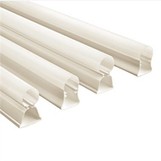

As a seasoned supplier of Lamp Cover Plastic, I've received numerous inquiries from customers regarding the fading resistance of our products. This concern is completely understandable, as a faded lamp cover can significantly detract from the aesthetic appeal of a lighting fixture and may even affect its performance. In this blog post, I'll delve into the science behind the fading resistance of Lamp Cover Plastic and share some insights on how our products stand up to the test of time.
Understanding the Causes of Fading
Before we can discuss the fading resistance of Lamp Cover Plastic, it's important to understand what causes fading in the first place. Fading is primarily caused by exposure to ultraviolet (UV) radiation, which is a component of sunlight. UV radiation can break down the chemical bonds in plastic materials, causing them to lose their color and clarity over time. Other factors that can contribute to fading include heat, humidity, and exposure to certain chemicals.
The Science of Fading Resistance
To combat the effects of UV radiation and other environmental factors, we use advanced manufacturing techniques and high-quality materials in the production of our Lamp Cover Plastic. Our plastic formulations are specifically designed to resist fading by incorporating UV stabilizers and other additives that help to protect the material from the damaging effects of sunlight.
UV stabilizers work by absorbing or reflecting UV radiation, preventing it from reaching the plastic molecules and causing them to break down. These stabilizers are typically added to the plastic during the manufacturing process, ensuring that they are evenly distributed throughout the material. In addition to UV stabilizers, we also use other additives such as antioxidants and heat stabilizers to further enhance the durability and fading resistance of our Lamp Cover Plastic.
Testing and Certification
At our company, we take the fading resistance of our Lamp Cover Plastic very seriously. We conduct extensive testing on all of our products to ensure that they meet or exceed industry standards for fading resistance. Our testing procedures include exposing the plastic to simulated sunlight and other environmental conditions for extended periods of time to evaluate its performance.
In addition to our in-house testing, we also work with independent third-party laboratories to certify the fading resistance of our products. These certifications provide our customers with the assurance that our Lamp Cover Plastic is of the highest quality and will maintain its color and clarity for many years to come.
Real-World Performance
While laboratory testing is an important part of ensuring the fading resistance of our Lamp Cover Plastic, it's also important to consider real-world performance. We have received numerous positive feedback from our customers who have installed our Lamp Cover Plastic in a variety of applications, including residential and commercial lighting fixtures, outdoor signage, and automotive lighting.
In many cases, our customers have reported that our Lamp Cover Plastic has maintained its color and clarity for several years, even in harsh outdoor environments. This is a testament to the quality of our products and the effectiveness of our manufacturing processes.
Comparing Different Types of Lamp Cover Plastic
There are several different types of plastic materials that can be used for lamp covers, each with its own unique properties and fading resistance characteristics. Some of the most common types of Lamp Cover Plastic include polycarbonate, acrylic, and PVC.
- Polycarbonate: Polycarbonate is a strong and durable plastic material that is known for its excellent impact resistance and high transparency. It also has good fading resistance, making it a popular choice for lamp covers in both indoor and outdoor applications.
- Acrylic: Acrylic is a lightweight and transparent plastic material that is often used for lamp covers because of its excellent optical properties. It has good fading resistance, but it is not as strong or durable as polycarbonate.
- PVC: PVC is a versatile plastic material that is commonly used for lamp covers because of its low cost and ease of processing. It has moderate fading resistance, but it may not be suitable for outdoor applications where it will be exposed to direct sunlight for extended periods of time.
When choosing a Lamp Cover Plastic, it's important to consider the specific requirements of your application, including the level of fading resistance, impact resistance, and transparency that you need. Our team of experts can help you select the right material for your needs and provide you with detailed information about the fading resistance and other properties of our products.


Conclusion
In conclusion, the fading resistance of Lamp Cover Plastic is an important consideration when choosing a material for your lighting fixtures. At our company, we are committed to providing our customers with high-quality Lamp Cover Plastic that is resistant to fading and other environmental factors. Our advanced manufacturing techniques and high-quality materials ensure that our products will maintain their color and clarity for many years to come, even in harsh outdoor environments.
If you are interested in learning more about our Lamp Cover Plastic or would like to discuss your specific requirements, please contact us. Our team of experts will be happy to assist you and provide you with a free quote.
References
- ASTM International. (2021). Standard Test Method for Evaluating the Colorfastness of Plastics and Other Nonmetallic Materials to Indoor Lighting. ASTM D4329-19.
- ISO 4892-2:2013. Plastics — Methods of exposure to laboratory light sources — Part 2: Xenon-arc lamps.
- PlasticsEurope. (2020). Plastics in the Circular Economy. A Vision for 2040.