
As a supplier of T5 Fixture Housing, I've been deeply involved in the lighting industry for years. The question of whether T5 Fixture Housing is energy - efficient is one that I often encounter from customers, contractors, and industry enthusiasts. In this blog, I'll explore this topic in detail, drawing on my experience and knowledge of the field.

Understanding T5 Fixture Housing
First, let's clarify what T5 Fixture Housing is. T5 refers to a type of fluorescent lamp tube with a diameter of 5/8 inches (about 16mm). The T5 Fixture Housing is the enclosure that holds the T5 lamp, along with other components such as ballasts and reflectors. It plays a crucial role in the overall performance of the lighting system.

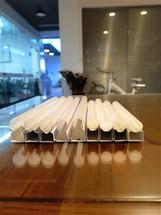
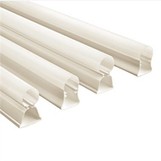
T5 Fixture Housing comes in various materials, including plastic and metal. Plastic T5 Fixture Housing, like the [Plastic Profiles]( /extruded - plastic - profile/extruded - plastic - light - fixture/plastic - profiles.html) we offer, has become increasingly popular due to its lightweight, corrosion - resistant, and cost - effective nature.
Energy Efficiency Factors
Lamp Technology
T5 lamps are known for their relatively high energy efficiency compared to some other traditional lighting sources. They use less energy to produce the same amount of light as, for example, T8 lamps. T5 lamps have a better efficacy, which is measured in lumens per watt (lm/W). Higher efficacy means that more light is produced for each watt of electricity consumed.
The improved design of T5 lamps allows for better phosphor coatings, which convert more of the electrical energy into visible light rather than heat. This is a significant advantage when it comes to energy efficiency, as less wasted energy means lower electricity bills and a reduced environmental impact.
Fixture Design
The design of the T5 Fixture Housing also affects energy efficiency. A well - designed fixture can optimize the distribution of light, ensuring that more of the light produced by the lamp reaches the intended area. Reflectors within the housing can redirect light that would otherwise be lost, increasing the overall light output and reducing the need for additional lighting.
For example, our T5 Fixture Housing is engineered with precision to maximize light reflection and minimize light loss. The smooth interior surface of the housing helps to bounce light in the right direction, providing uniform illumination across the area.
Compatibility with Ballasts
The ballast is an essential component in a fluorescent lighting system as it regulates the current to the lamp. T5 lamps are often paired with electronic ballasts, which are more energy - efficient than magnetic ballasts. Electronic ballasts can start the lamp more quickly and maintain a stable current, reducing energy consumption and extending the lamp's lifespan.
When choosing a T5 Fixture Housing, it's important to ensure that it is compatible with high - quality electronic ballasts. This combination can further enhance the energy efficiency of the entire lighting system.
Comparison with T8 Fixture Housing
To better understand the energy efficiency of T5 Fixture Housing, it's useful to compare it with [T8 Fixture Housing]( /extruded - plastic - profile/extruded - plastic - light - fixture/t8 - fixture - housing.html). T8 lamps have a larger diameter of 1 inch (about 25mm) compared to T5 lamps.
In terms of energy efficiency, T5 lamps generally outperform T8 lamps. T5 lamps can produce more light per watt, which means that for the same lighting requirements, a T5 - based lighting system will consume less electricity.
Moreover, the smaller size of T5 lamps allows for more compact fixture designs. This can be beneficial in applications where space is limited, and it also reduces the amount of material used in the fixture housing, which can contribute to overall energy savings during the manufacturing process.
Real - World Applications and Energy Savings
In commercial and industrial settings, the energy savings from using T5 Fixture Housing can be substantial. For example, in a large warehouse or factory, replacing T8 lighting systems with T5 systems can lead to significant reductions in electricity costs.
Let's assume a warehouse with 100 lighting fixtures. If each T8 fixture consumes 40 watts of power and operates for 12 hours a day, the daily energy consumption would be 40 watts x 100 fixtures x 12 hours = 48,000 watt - hours or 48 kilowatt - hours (kWh).
If we replace these T8 fixtures with T5 fixtures that consume, say, 28 watts each, the daily energy consumption would be 28 watts x 100 fixtures x 12 hours = 33,600 watt - hours or 33.6 kWh. This represents a daily energy savings of 48 kWh - 33.6 kWh = 14.4 kWh. Over a year, this could result in thousands of dollars in savings on electricity bills.
Environmental Impact
Energy - efficient lighting solutions like T5 Fixture Housing also have a positive environmental impact. By consuming less electricity, they reduce the demand for fossil - fuel - based power generation, which in turn decreases greenhouse gas emissions.
In addition, the longer lifespan of T5 lamps means fewer replacements, reducing the amount of waste sent to landfills. This makes T5 Fixture Housing a more sustainable choice for both businesses and the environment.
Considerations for Choosing T5 Fixture Housing
When selecting T5 Fixture Housing, there are several factors to consider beyond energy efficiency.
Quality and Durability
The quality of the housing material and construction is crucial. A high - quality T5 Fixture Housing will be able to withstand the rigors of daily use, resist damage, and maintain its performance over time. Our plastic T5 Fixture Housing is made from high - grade materials that are designed to be durable and long - lasting.
Light Output and Distribution
The light output and distribution characteristics of the fixture housing should match the specific lighting requirements of the application. Different environments may require different levels of illumination and beam angles.
Compatibility
As mentioned earlier, compatibility with the lamp and ballast is essential. Ensure that the T5 Fixture Housing you choose is designed to work seamlessly with the T5 lamps and electronic ballasts you plan to use.
Conclusion
In conclusion, T5 Fixture Housing is indeed energy - efficient. The combination of energy - efficient T5 lamps, well - designed fixture housing, and compatible electronic ballasts results in a lighting system that consumes less electricity while providing high - quality illumination.
Compared to T8 Fixture Housing, T5 Fixture Housing offers better energy efficiency, more compact designs, and potential cost savings in the long run. In addition, its use contributes to a more sustainable environment by reducing energy consumption and waste.
If you're in the market for T5 Fixture Housing or have any questions about energy - efficient lighting solutions, I encourage you to reach out for a procurement discussion. We're here to help you find the best lighting options for your specific needs.
References
- "Lighting Handbook: Reference and Application", Illuminating Engineering Society of North America
- "Energy - Efficient Lighting Technologies", U.S. Department of Energy