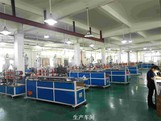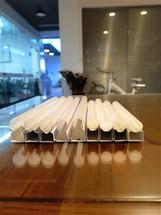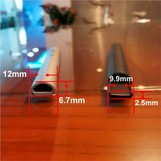

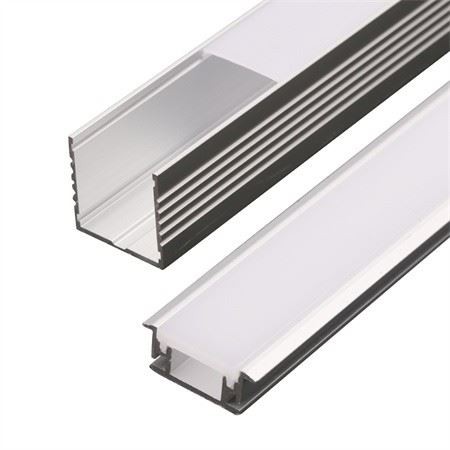
As a supplier of extruded aluminium, I often get asked about the alloys used in the process. Extruded aluminium is a versatile material that finds its way into countless applications, from LED Aluminum Profile to structural components in construction. The choice of alloy plays a crucial role in determining the properties and performance of the final extruded product. In this blog post, I'll take you through some of the most commonly used alloys in extruded aluminium and their characteristics.
6061 Aluminum Alloy
One of the most popular alloys for extruded aluminium is 6061. This alloy is part of the 6000 series, which is known for its excellent combination of strength, corrosion resistance, and weldability. 6061 aluminium contains magnesium and silicon as its primary alloying elements, which contribute to its unique properties.
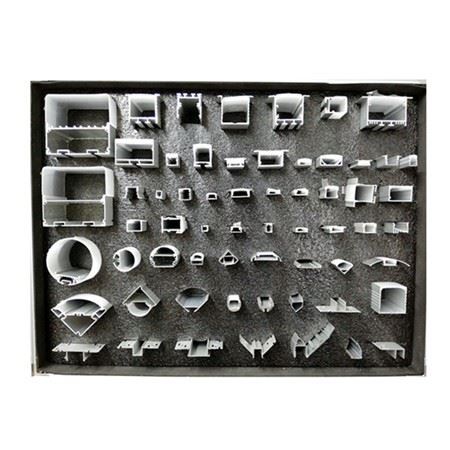
The strength of 6061 makes it suitable for a wide range of applications, including automotive parts, aerospace components, and Extruded Aluminum Profiles for structural use. It can be easily heat-treated to achieve different levels of hardness and strength, allowing for customization based on specific requirements.
In terms of corrosion resistance, 6061 performs well in most environments. It forms a protective oxide layer on its surface, which helps prevent further oxidation and corrosion. This makes it a great choice for outdoor applications where exposure to moisture and other corrosive elements is a concern.
Another advantage of 6061 is its excellent machinability. It can be easily cut, drilled, and shaped, making it a preferred choice for manufacturers who need to create complex parts and profiles. Whether you're looking to produce simple brackets or intricate architectural elements, 6061 can be machined to meet your specifications.
6063 Aluminum Alloy
Similar to 6061, 6063 is also a member of the 6000 series. However, it has a slightly different composition, with a lower magnesium and silicon content compared to 6061. This results in a softer and more ductile alloy, which is ideal for applications that require high surface finish and precision.
One of the key features of 6063 is its excellent extrudability. It can be easily formed into complex shapes and profiles, making it a popular choice for LED Strip Aluminum Profile and other decorative applications. The smooth surface finish of 6063 allows for easy anodizing and painting, further enhancing its aesthetic appeal.
In addition to its extrudability, 6063 also offers good corrosion resistance. It is suitable for both indoor and outdoor applications, although it may require additional protection in harsh environments. Like 6061, it can be heat-treated to improve its strength and hardness, but it is generally used in its natural state for applications where high strength is not a primary requirement.
5052 Aluminum Alloy
The 5052 alloy belongs to the 5000 series, which is known for its high strength and excellent corrosion resistance. Unlike the 6000 series, which contains magnesium and silicon, 5052 has a higher magnesium content, which gives it its unique properties.
One of the main advantages of 5052 is its high strength-to-weight ratio. It is stronger than many other aluminium alloys, yet it is still relatively lightweight. This makes it a great choice for applications where weight is a concern, such as marine and automotive components.
In terms of corrosion resistance, 5052 performs exceptionally well in saltwater environments. It is often used in boat building, offshore structures, and other marine applications where exposure to saltwater can cause significant corrosion. The alloy forms a protective layer on its surface, which helps prevent the penetration of saltwater and other corrosive substances.
Another benefit of 5052 is its good formability. It can be easily bent, rolled, and formed into different shapes without cracking or breaking. This makes it a versatile material for a variety of applications, including sheet metal fabrication and structural components.
7075 Aluminum Alloy
The 7075 alloy is part of the 7000 series, which is known for its high strength and excellent fatigue resistance. It contains zinc as its primary alloying element, along with other elements such as magnesium and copper, which contribute to its unique properties.
One of the key features of 7075 is its extremely high strength. It is one of the strongest aluminium alloys available, making it suitable for applications that require high load-bearing capacity, such as aerospace and military components. The alloy can be heat-treated to achieve even higher levels of strength, making it a preferred choice for critical applications where safety and reliability are paramount.
In addition to its high strength, 7075 also offers excellent fatigue resistance. It can withstand repeated loading and unloading without developing cracks or other forms of damage, making it ideal for applications that are subject to cyclic stress, such as aircraft wings and landing gears.
However, 7075 has some limitations. It is more difficult to extrude compared to other alloys, and it is also more expensive. Additionally, it has poor corrosion resistance compared to some other alloys, especially in saltwater environments. Therefore, it is often used in applications where its high strength and fatigue resistance outweigh its corrosion limitations, and additional protection measures can be taken to prevent corrosion.
Choosing the Right Alloy
When it comes to choosing the right alloy for your extruded aluminium products, there are several factors to consider. The first factor is the specific application and its requirements. If you need a high-strength alloy for a structural component, 6061 or 7075 may be a good choice. If you're looking for a alloy with excellent extrudability and surface finish for a decorative application, 6063 may be more suitable.
Another important factor is the environment in which the product will be used. If the product will be exposed to harsh chemicals or saltwater, you'll need to choose an alloy with good corrosion resistance, such as 5052. If the product will be used in a high-temperature environment, you'll need to consider an alloy that can withstand elevated temperatures without losing its properties.
Cost is also a consideration. Some alloys, such as 7075, are more expensive than others. You'll need to balance the cost of the alloy with its performance and the specific requirements of your application.
As a supplier of extruded aluminium, I have extensive experience in helping customers choose the right alloy for their needs. I can provide you with detailed information about the properties and characteristics of different alloys, as well as offer advice on the best manufacturing processes and finishing options. If you're interested in learning more about our extruded aluminium products or have any questions about alloy selection, please don't hesitate to contact me. We're here to help you find the perfect solution for your project.
References
- ASM Handbook, Volume 2: Properties and Selection: Nonferrous Alloys and Special-Purpose Materials, ASM International
- Aluminum Association, Inc., Aluminum Standards and Data