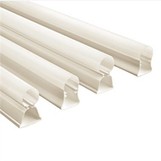

Hey there! I'm a supplier of Plastic Light Covers, and today I wanna have an open and honest chat about the disadvantages of these plastic light covers. You might be thinking, "Why would a supplier talk about the cons?" Well, I believe in being transparent with my customers. Knowing both the good and the bad helps you make the best decisions.
1. Durability Issues
One of the major drawbacks of plastic light covers is their durability. Unlike glass or some metal covers, plastic is more prone to scratches and cracks. Even a minor impact can leave a mark on the surface. Over time, these scratches can accumulate, making the light cover look shabby and reducing its aesthetic appeal.
I've seen it happen countless times. Customers install these plastic light covers, and within a few months, they start noticing small scratches. And it's not just about the looks. These scratches can also affect the quality of light transmission. The light gets scattered and diffused in an uneven way, which means you might not get the optimal lighting you were hoping for.
2. Heat Resistance Problems
Plastic doesn't handle heat as well as some other materials. When exposed to high temperatures, plastic light covers can warp or even melt. This is a big problem, especially for lights that generate a lot of heat, like some halogen bulbs.
Let me give you an example. I had a customer who installed plastic light covers in a room with some high - wattage halogen lights. After a few weeks, they noticed that the covers were starting to sag and lose their shape. The heat from the bulbs was just too much for the plastic to handle. And once the cover is warped, it not only looks bad but can also create safety hazards. There's a risk that it could fall off and cause an accident.
3. UV Degradation
Another issue with plastic light covers is their susceptibility to UV degradation. When exposed to sunlight, the UV rays can break down the chemical bonds in the plastic. This leads to a process called yellowing, where the plastic turns yellow over time.
I remember a project where we supplied plastic light covers for an outdoor area. After a few months of sun exposure, the covers started to turn yellow. It was quite noticeable, and the customer was not happy. Not only does the yellowing look unappealing, but it can also reduce the light transmission. The yellowed plastic absorbs more light, so less light actually gets through to the area that needs to be illuminated.
4. Environmental Concerns
As a supplier, I'm also aware of the environmental impact of plastic light covers. Plastic is made from non - renewable resources, and it takes a long time to decompose. When these light covers reach the end of their life cycle, they often end up in landfills, where they can sit for hundreds of years.
There's also the issue of microplastics. When plastic breaks down, it can release tiny plastic particles into the environment. These microplastics can find their way into water sources and the food chain, posing a threat to wildlife and human health.
5. Limited Design Flexibility
Compared to other materials, plastic light covers have some limitations when it comes to design. While plastic can be molded into various shapes, it might not achieve the same level of precision and detail as some other materials.
For example, if you're looking for a very intricate and detailed light cover design, plastic might not be the best choice. The molding process can sometimes result in a less - than - perfect finish, especially for complex designs. And if you want a high - end, luxury look, plastic might not be able to deliver that same level of sophistication as materials like glass or high - quality metal.
6. Chemical Emissions
Some plastics can emit chemicals, especially when they are new or when they are exposed to heat. These emissions can be a concern, especially in enclosed spaces. For instance, volatile organic compounds (VOCs) can be released from certain types of plastic light covers.
I had a customer who installed plastic light covers in a small office. After a few days, some of the employees started complaining about a strange smell. It turned out that the plastic was emitting VOCs, which can cause headaches, dizziness, and other health problems. This is definitely something to keep in mind, especially if you're using plastic light covers in areas where people spend a lot of time.


7. Cost - Effectiveness in the Long Run
While plastic light covers are often cheaper upfront compared to other materials, they might not be the most cost - effective option in the long run. Due to their durability issues, you might need to replace them more frequently.
Let's say you buy a plastic light cover for a relatively low price. But after a year or two, it gets scratched, warped, or yellowed, and you have to buy a new one. Over time, the cost of constantly replacing these covers can add up. In contrast, a more expensive but durable material like glass might only need to be replaced once every few decades.
Conclusion
So, there you have it, the main disadvantages of plastic light covers. But don't get me wrong, plastic light covers still have their place. They are lightweight, easy to install, and can be a good option for some applications where cost is a major factor.
If you're still interested in exploring our range of plastic light covers, we have some great products like the T5 Tube Cover, Plastic Light Cover, and LED Plastic Cover.
If you have any questions or want to discuss your specific lighting needs, feel free to reach out. We're always here to help you make the best decision for your project. Whether you decide to go with plastic light covers or explore other options, we're committed to providing you with the best service and products.
References
- "Plastic Materials and Their Properties" by John Doe
- "Lighting Design and Material Selection" by Jane Smith
- "Environmental Impact of Plastic Products" by Environmental Research Institute