
As a leading supplier of LED light lenses, I often encounter questions from clients regarding various technical aspects of our products. One of the most frequently asked questions is about the beam angle of an LED light lens. In this blog post, I'll delve into what the beam angle is, its significance, and how it affects the performance of LED lighting systems.


Understanding the Beam Angle
The beam angle of an LED light lens refers to the angle at which light is emitted from the source. It is measured in degrees and determines the spread of light in a specific area. Imagine a flashlight; when you shine it on a wall, the illuminated area forms a cone. The beam angle is the angle between the edges of this cone.
A narrow beam angle, typically less than 30 degrees, produces a concentrated and focused beam of light. This is ideal for applications where you need to highlight a specific object or area, such as in retail displays to showcase products, in museums to illuminate artworks, or in track lighting to accentuate architectural features.
On the other hand, a wide beam angle, usually greater than 120 degrees, spreads light over a larger area. This is suitable for general lighting purposes, like in living rooms, offices, or warehouses, where you want to evenly illuminate a large space without creating harsh shadows.
Importance of Beam Angle in LED Lighting
The beam angle plays a crucial role in determining the effectiveness and efficiency of an LED lighting system. Here are some key reasons why it matters:
Lighting Design
In architectural and interior lighting design, the beam angle is used to create different moods and effects. A narrow beam can be used to create a dramatic and focused atmosphere, while a wide beam can provide a soft and ambient glow. By carefully selecting the beam angle, designers can enhance the aesthetics of a space and guide the viewer's attention.
Energy Efficiency
Choosing the right beam angle can also contribute to energy savings. When you use a narrow beam angle in areas where focused lighting is required, you can avoid wasting light on areas that don't need it. This means you can use fewer fixtures and lower wattage bulbs, reducing energy consumption and costs.
Visibility and Safety
In outdoor lighting applications, such as streetlights and parking lot lights, the beam angle affects visibility and safety. A wide beam angle ensures that a larger area is illuminated, reducing the risk of accidents and improving security.
Factors Affecting Beam Angle
Several factors can influence the beam angle of an LED light lens. These include:
Lens Design
The shape and curvature of the lens are the primary factors that determine the beam angle. Different lens designs can produce different beam patterns, such as spot, flood, or oval. For example, a convex lens can focus light into a narrow beam, while a concave lens can spread it out.
LED Chip Configuration
The number and arrangement of LED chips in a fixture can also affect the beam angle. Multiple chips can be combined to create a wider or more uniform beam. Additionally, the type of LED chip used, such as high-power or low-power chips, can influence the beam characteristics.
Reflectors and Optics
Reflectors and other optical components can be used to modify the beam angle. A reflector can be designed to direct light in a specific direction, while a diffuser can scatter light to create a more even distribution.
Applications of Different Beam Angles
Let's take a closer look at some specific applications and the appropriate beam angles for each:
Retail Lighting
In a retail store, different areas require different lighting effects. For display cases, a narrow beam angle of 15 - 30 degrees is ideal to highlight products and make them stand out. This creates a spotlight effect that draws the customer's attention. For general aisle lighting, a wider beam angle of 60 - 90 degrees can provide sufficient illumination for shoppers to move around comfortably.
Office Lighting
In an office environment, task lighting requires a focused beam angle of 30 - 60 degrees to provide adequate light on desks and work surfaces. Ambient lighting, on the other hand, can use a wider beam angle of 90 - 120 degrees to create a comfortable and well-lit space.
Outdoor Lighting
For landscape lighting, a wide beam angle of 120 - 180 degrees can be used to illuminate large areas such as gardens and lawns. In street lighting, a combination of narrow and wide beam angles can be used to ensure both focused illumination on the road and uniform lighting on the sidewalks.
Our LED Light Lens Products and Beam Angles
As an LED light lens supplier, we offer a wide range of products with different beam angles to meet the diverse needs of our customers. Our Lampshade PC Diffuser is designed to provide a wide and even beam of light, making it suitable for general lighting applications. It is made of high-quality polycarbonate material, which is durable and resistant to UV radiation.
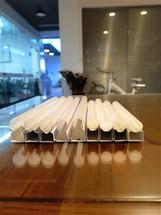
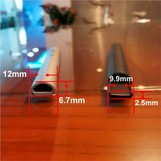
Our Extruded Linear Lens is ideal for linear lighting fixtures, such as under-cabinet lighting and signage lighting. It can be customized to produce different beam angles, allowing for precise control of light distribution.
The LED Diffuser Strip is another popular product that offers a soft and diffused beam of light. It is commonly used in decorative lighting applications, such as in cove lighting and backlighting, to create a warm and inviting atmosphere.
Conclusion
The beam angle of an LED light lens is a critical parameter that affects the performance, design, and efficiency of an LED lighting system. By understanding the concept of beam angle and its importance, you can make informed decisions when selecting LED lighting products for your specific needs.
At our company, we are committed to providing high-quality LED light lenses with a wide range of beam angles to meet the diverse requirements of our customers. Whether you need focused lighting for a specific application or general illumination for a large space, we have the right solution for you.
If you are interested in learning more about our LED light lens products or discussing your lighting needs, please feel free to contact us. Our team of experts is ready to assist you in finding the perfect lighting solution for your project.
References
- Lighting Handbook: Reference and Application, 10th Edition, Illuminating Engineering Society (IES)
- LED Lighting Basics, U.S. Department of Energy
- Architectural Lighting Design, by Randall Whitehead