
Hey there! As a supplier of Modified PC ABS, I often get asked about the ultimate tensile strength of this amazing material. So, let's dive right in and break it down.


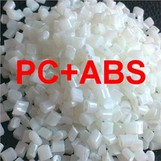
First off, what is Modified PC ABS? It's a blend of polycarbonate (PC) and acrylonitrile butadiene styrene (ABS), and the "modified" part means we've tweaked it to enhance certain properties. This material is super popular in various industries because it combines the best of both worlds - the high impact resistance and heat resistance of PC, and the good processability and chemical resistance of ABS.
Now, let's talk about ultimate tensile strength. It's basically the maximum stress a material can handle before it breaks when being pulled or stretched. For Modified PC ABS, the ultimate tensile strength can vary quite a bit depending on a few factors.
One of the biggest factors is the ratio of PC to ABS in the blend. If there's more PC, the material tends to have higher tensile strength because PC is a pretty strong polymer on its own. But if there's more ABS, the material might be more flexible but have a lower ultimate tensile strength.
Another factor is the additives we use during the modification process. We can add things like glass fibers, carbon fibers, or other reinforcing agents to boost the tensile strength. These additives act like tiny little skeletons inside the material, giving it more support and making it harder to break.
For example, our General Purpose PCABS Alloy is designed for a wide range of applications. It has a decent ultimate tensile strength that makes it suitable for everyday use. It's not the strongest out there, but it's reliable and can handle a fair amount of stress.
On the other hand, our Electroplating Grade PCABS Alloy is optimized for electroplating processes. While its main focus is on having good adhesion for the plating, we also make sure it has enough tensile strength to withstand the manufacturing and end - use requirements.
And then there's our Heat Resistance PCABS Alloy. This one is formulated to handle high temperatures, and in the process of making it heat - resistant, we also manage to maintain a good level of ultimate tensile strength. Even when it gets hot, it doesn't lose its ability to resist being pulled apart easily.
In general, the ultimate tensile strength of Modified PC ABS can range from around 40 MPa to 80 MPa or even higher, depending on the specific formulation. To put that in perspective, a lower - strength Modified PC ABS with a tensile strength of 40 MPa can still hold up well in many consumer products like phone cases or small household items. But for more demanding applications, like automotive parts or industrial equipment, we can formulate a higher - strength version with a tensile strength closer to 80 MPa or more.
Testing the ultimate tensile strength is a crucial part of our quality control process. We use specialized testing equipment to pull samples of our Modified PC ABS until they break. By measuring the force applied and the cross - sectional area of the sample, we can calculate the ultimate tensile strength. We do this regularly to make sure that every batch of our product meets the required standards.
So, why does the ultimate tensile strength matter? Well, for manufacturers, it's all about ensuring the reliability and durability of their products. If a product is made from a material with low tensile strength, it might break easily under normal use, which can lead to customer dissatisfaction and even safety issues. On the other hand, using a material with too high a tensile strength might be overkill and increase the cost of production.
As a supplier, we work closely with our customers to understand their specific needs. If they're making a product that will be subjected to a lot of stress, like a heavy - duty tool housing, we can recommend a high - strength Modified PC ABS. But if they're making something more lightweight and less stressed, like a decorative item, a lower - strength version might be more appropriate.
We also offer custom formulations. If a customer has very specific requirements for the ultimate tensile strength, we can adjust the ratio of PC to ABS and the type and amount of additives to create a material that meets their exact needs.
If you're in the market for Modified PC ABS and want to know more about the ultimate tensile strength or any other properties, don't hesitate to reach out to us. We're here to help you find the perfect material for your application. Whether you're a small - scale manufacturer or a large - scale industrial company, we have the expertise and the products to meet your demands.
In conclusion, the ultimate tensile strength of Modified PC ABS is a key property that can vary based on the formulation and additives. It plays a vital role in determining the suitability of the material for different applications. And as your trusted Modified PC ABS supplier, we're committed to providing high - quality products with the right balance of properties, including ultimate tensile strength. So, if you're interested in learning more or starting a procurement process, just get in touch with us, and we'll start the conversation.
References
- "Plastics Materials and Processing" by Donald R. Paul and Christopher B. Bucknall
- "Engineering Plastics: Properties and Applications" by Samuel P. Hergenrother, Charles E. Sokol, and John M. Margolis