
When it comes to product displays, lighting plays a crucial role. LED lights have become the go - to choice for many retailers and exhibitors due to their energy efficiency, long lifespan, and versatility. But the right LED light lens can take your product display from ordinary to extraordinary. As an LED Light Lens supplier, I've seen firsthand how different lenses can impact the overall look and feel of a display. So, let's dive into what types of LED light lenses are best for product displays.


1. Diffuser Lenses
Diffuser lenses are a popular choice for product displays, and you can find a great option with our Lampshade PC Diffuser. These lenses work by scattering light, creating a soft, even illumination. This is especially useful when you want to reduce harsh shadows and highlights on your products.
For example, if you're displaying delicate jewelry or high - end cosmetics, a diffuser lens can make the items look more inviting and less likely to have unflattering glare. The soft light also helps to evenly showcase colors, making sure that what the customer sees is an accurate representation of the product.
One of the advantages of diffuser lenses is that they are very forgiving. You don't have to worry too much about the exact positioning of the LED lights, as the diffusing effect helps to spread the light over a wider area. This can save you time and effort during the setup of your product display.
2. Reflector Lenses
Reflector lenses are another option to consider. These lenses are designed to direct light in a specific direction, focusing it on the products you want to highlight. Our LED Light Lens can be customized to act as a reflector lens in many cases.
If you have a particular product that you want to draw attention to, like a new arrival or a featured item, a reflector lens can create a spotlight effect. This makes the product stand out from the rest of the display, attracting the customer's eye.
However, it's important to use reflector lenses carefully. If the light is too concentrated, it can create a harsh contrast between the highlighted product and the surrounding area. You need to find the right balance to make the display look visually appealing.
3. Fresnel Lenses
Fresnel lenses are a bit more specialized but can be extremely effective for certain types of product displays. These lenses are thin and lightweight, yet they can focus light very efficiently. You can think of them as a flattened version of a traditional convex lens.
In a product display, Fresnel lenses can be used to create a more intense and directed beam of light. This is great for large - scale displays or when you want to create a dramatic effect. For instance, if you're showcasing a large piece of furniture or a high - end car, a Fresnel lens can help to highlight the details and contours of the product.
The drawback of Fresnel lenses is that they can be more expensive than other types of lenses. Also, they require more precise positioning to get the desired lighting effect. But if you're willing to invest in them, they can really make your product display shine.
4. Extruded Linear Lenses
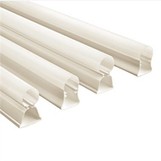
Extruded linear lenses, such as our Extruded Linear Lens, are ideal for long, narrow product displays. These lenses are typically used in applications like shelf lighting or display cases.
The linear design of these lenses allows for a uniform distribution of light along a straight line. This is perfect for displaying products in a row, like books, bottles, or clothing items on a rack. The light is evenly spread, ensuring that each product in the display gets the same amount of illumination.
Extruded linear lenses are also very durable and easy to install. They can be cut to the desired length, making them a flexible option for different display sizes and configurations.
5. Prismatic Lenses
Prismatic lenses are unique in that they can split light into its spectral components, creating a beautiful and eye - catching effect. In a product display, this can add a touch of elegance and sophistication.
These lenses work by refracting light through a series of prisms, which can create interesting patterns and colors. They are often used in high - end retail displays, art galleries, or museums. For example, if you're displaying a collection of glassware or art pieces, a prismatic lens can enhance the visual appeal of the items by adding a bit of sparkle and color play.
However, prismatic lenses can be a bit tricky to use. The light patterns they create can be unpredictable, and you need to experiment to find the right setup for your specific display.
Factors to Consider When Choosing LED Light Lenses
- Product Type: Different products require different lighting. For example, shiny products like electronics may need diffused light to reduce glare, while textured products like wood or stone may benefit from a more directional light to highlight the details.
- Display Size and Layout: The size and shape of your display will also influence your lens choice. A large - scale display may need a lens that can cover a wide area, while a small, focused display may require a more concentrated beam of light.
- Budget: Some lenses, like Fresnel lenses, can be more expensive than others. You need to balance your lighting needs with your budget to find the best option for your product display.
Conclusion
Choosing the right LED light lens for your product display is not a one - size - fits - all decision. Each type of lens has its own advantages and disadvantages, and the best choice depends on your specific products, display layout, and budget. As an LED Light Lens supplier, I'm here to help you navigate through these options and find the perfect lens for your needs.
If you're interested in learning more about our LED light lenses or have a specific product display in mind, don't hesitate to reach out. We can have a detailed discussion about your requirements and provide you with the best solutions. Let's work together to make your product display truly stand out!
References
- Lighting for Retail Displays: Best Practices and Trends. Lighting Industry Journal.
- The Science of LED Lenses and Their Applications. Optics Research Institute.