

Warehouses are vast spaces that demand efficient and reliable lighting solutions to ensure smooth operations. As a supplier of T8 Fixture Housing, I often encounter the question: Can T8 Fixture Housing be used in a warehouse? In this blog post, I'll delve into the viability of using T8 Fixture Housing in warehouses, exploring its advantages, limitations, and considerations.
Advantages of Using T8 Fixture Housing in Warehouses
Cost - Effectiveness
One of the primary benefits of T8 Fixture Housing is its cost - effectiveness. Compared to some of the more advanced lighting systems, T8 fixtures are relatively inexpensive to purchase and install. For large - scale warehouses where a significant number of lighting units are required, the cost savings can be substantial. This affordability allows warehouse owners to illuminate their spaces without breaking the bank.
Compatibility
T8 Fixture Housing is highly compatible with a wide range of bulbs. Whether you prefer traditional fluorescent bulbs or more energy - efficient LED bulbs, T8 fixtures can accommodate them. This flexibility means that warehouse managers can choose the type of lighting that best suits their needs, whether it's for general illumination, task lighting, or specialized applications. For example, if a warehouse has specific areas that require high - intensity lighting, they can easily install high - output LED bulbs in the T8 fixtures.
Energy Efficiency
Modern T8 LED bulbs are known for their energy efficiency. They consume significantly less energy than traditional incandescent or fluorescent bulbs, which can lead to substantial savings on electricity bills over time. In a warehouse setting, where lighting is often required for long hours, these energy savings can add up quickly. Additionally, energy - efficient lighting is also more environmentally friendly, reducing the warehouse's carbon footprint.
Ease of Installation
T8 Fixture Housing is relatively easy to install. Its standardized design means that it can be quickly and easily mounted on the ceiling or walls of a warehouse. This ease of installation not only saves time but also reduces labor costs. Warehouse maintenance teams can often handle the installation themselves, without the need for specialized contractors.
Limitations of Using T8 Fixture Housing in Warehouses
Light Distribution
While T8 fixtures can provide adequate lighting, their light distribution may not be as uniform as some other lighting systems. In large warehouses, there may be areas where the light is not evenly spread, resulting in dark spots or uneven illumination. This can be a problem, especially in areas where accurate visibility is crucial, such as in picking and packing areas or near loading docks.
Durability
Warehouses are often high - traffic areas with a lot of activity. T8 Fixture Housing may not be as durable as some other lighting fixtures. They can be more susceptible to damage from impacts, vibrations, or harsh environmental conditions. For example, if a forklift accidentally hits a T8 fixture, it may break or become misaligned, requiring replacement.
Color Rendering Index (CRI)
The Color Rendering Index (CRI) of T8 fixtures can vary depending on the type of bulb used. A lower CRI means that colors may not appear as accurately under the light, which can be a problem in warehouses where color - coded inventory or equipment is used. For instance, if a warehouse uses color - coded labels to identify different products, a low - CRI light may make it difficult to distinguish between the colors.
Considerations for Using T8 Fixture Housing in Warehouses
Warehouse Size and Layout
The size and layout of the warehouse play a crucial role in determining whether T8 Fixture Housing is suitable. In smaller warehouses or those with a simple layout, T8 fixtures may be sufficient to provide adequate lighting. However, in larger warehouses with complex layouts, additional lighting solutions may be required to ensure uniform illumination. For example, in a multi - level warehouse or one with high ceilings, T8 fixtures may need to be supplemented with high - bay lighting or other specialized lighting systems.
Lighting Requirements
Different areas of a warehouse may have different lighting requirements. For example, storage areas may require less intense lighting than areas where detailed work is being done, such as quality control stations or assembly lines. Warehouse managers need to carefully assess the lighting needs of each area and determine the appropriate number and placement of T8 fixtures. They may also need to consider the use of dimmer switches or other lighting controls to adjust the light levels as needed.

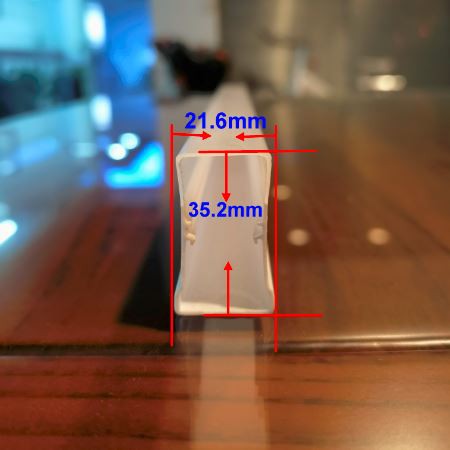
Environmental Conditions
Warehouses can have a variety of environmental conditions, including temperature, humidity, and dust levels. T8 Fixture Housing needs to be able to withstand these conditions. For example, in a warehouse that is exposed to high levels of dust or moisture, the fixtures may need to be sealed or protected to prevent damage. Additionally, in extreme temperature conditions, the performance of the bulbs may be affected, so it's important to choose bulbs that are suitable for the warehouse's environment.
Comparison with Other Lighting Solutions
T5 LED Fixture Cover
T5 LED Fixture Covers are another option for warehouse lighting. They are generally more compact than T8 fixtures and can provide a more focused beam of light. However, they may not be as cost - effective as T8 fixtures, especially when it comes to large - scale installations. T5 fixtures may also have a more limited compatibility with different types of bulbs. You can learn more about T5 LED Fixture Cover on our website.
LED Light Fixture Housing
LED Light Fixture Housing offers even greater energy efficiency and durability than T8 Fixture Housing. They are designed specifically for LED bulbs and can provide a more uniform and high - quality light distribution. However, they are often more expensive to purchase and install. For warehouses that have the budget and require the highest level of lighting performance, LED Light Fixture Housing may be a better option. You can find more information about LED Light Fixture Housing on our website.
Conclusion
In conclusion, T8 Fixture Housing can be a viable option for warehouses, especially those on a budget or with less demanding lighting requirements. Its cost - effectiveness, compatibility, energy efficiency, and ease of installation make it an attractive choice. However, it also has some limitations, such as light distribution and durability, which need to be carefully considered. Warehouse managers should assess their specific needs, including the size and layout of the warehouse, lighting requirements, and environmental conditions, before deciding whether to use T8 Fixture Housing. If you're interested in learning more about T8 Fixture Housing or discussing your lighting needs, please feel free to contact us for a consultation. We're here to help you find the best lighting solution for your warehouse.
References
- Lighting Research Center, Rensselaer Polytechnic Institute. "Warehouse Lighting Guidelines."
- Energy Star. "Energy - Efficient Lighting for Commercial Buildings."
- Illuminating Engineering Society (IES). "IES Lighting Handbook."


