
The color rendering index (CRI) is a crucial metric in lighting design, measuring a light source's ability to accurately reproduce the colors of objects compared to a natural light source. As a leading supplier of T8 LED fixture covers, I've witnessed firsthand how these covers can significantly influence the CRI of the light emitted by T8 LED fixtures. In this blog post, I'll delve into the science behind this relationship, exploring the factors at play and how our T8 LED fixture covers can enhance or detract from the CRI.
Understanding the Color Rendering Index (CRI)
Before we dive into the impact of T8 LED fixture covers on CRI, let's first understand what CRI is and why it matters. The CRI is a scale from 0 to 100, with 100 representing a light source that perfectly reproduces the colors of objects as they would appear under natural sunlight. A higher CRI indicates that the light source can render colors more accurately, making objects look more vibrant and true to life.


In various applications, a high CRI is essential. In retail settings, for example, a high CRI light can make products appear more appealing, increasing their perceived value and potentially boosting sales. In healthcare facilities, accurate color rendering is crucial for medical professionals to make precise diagnoses. Even in residential settings, a high CRI light can enhance the overall ambiance and comfort of a space.
How T8 LED Fixture Covers Interact with Light
T8 LED fixture covers are typically made of materials such as polycarbonate, acrylic, or glass. These materials can have different optical properties, which affect how they interact with the light emitted by the T8 LED bulbs. When light passes through the fixture cover, it can be refracted, scattered, or absorbed, depending on the material's characteristics.
One of the primary ways T8 LED fixture covers can affect the CRI is through light scattering. Light scattering occurs when the light rays are redirected in different directions as they pass through the cover. This can cause the light to become more diffused, reducing the intensity of the direct light and creating a more even distribution of light across the space. While light scattering can have some benefits, such as reducing glare and creating a softer lighting effect, it can also have a negative impact on the CRI.
When light is scattered, some of the color information can be lost. This is because different wavelengths of light are scattered at different angles, causing the light to become less pure and the colors to appear less vivid. As a result, the CRI of the light can be reduced. The degree to which light scattering affects the CRI depends on several factors, including the material of the fixture cover, its thickness, and the quality of its surface finish.
Factors Affecting the Impact of T8 LED Fixture Covers on CRI
Material
The material of the T8 LED fixture cover is one of the most significant factors influencing its impact on the CRI. Different materials have different optical properties, which can affect how they interact with light. For example, polycarbonate is a popular choice for T8 LED fixture covers due to its high impact resistance and durability. However, polycarbonate can also have a relatively high level of light scattering, which can reduce the CRI.
On the other hand, acrylic is known for its excellent optical clarity and low light scattering. Acrylic fixture covers can transmit light more efficiently, allowing the colors to be rendered more accurately and maintaining a higher CRI. Glass is another option, which offers high transparency and can provide a very high CRI if properly manufactured. However, glass is heavier and more fragile than plastic materials, which can limit its use in some applications.
Thickness
The thickness of the T8 LED fixture cover can also affect the CRI. A thicker cover will generally scatter more light than a thinner one, as there is more material for the light to pass through. This increased light scattering can lead to a greater loss of color information and a lower CRI. Therefore, when choosing a T8 LED fixture cover, it's important to consider the thickness and its potential impact on the CRI.
Surface Finish
The surface finish of the T8 LED fixture cover can also play a role in its impact on the CRI. A smooth surface finish will generally allow light to pass through more easily, with less scattering. In contrast, a textured or frosted surface finish can increase light scattering, which can reduce the CRI. However, a textured or frosted surface finish can also have some benefits, such as reducing glare and creating a more diffused lighting effect. Therefore, it's important to strike a balance between the desired lighting effect and the impact on the CRI.
Our High-Quality T8 LED Fixture Covers for Optimal CRI
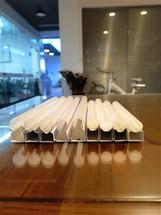
As a T8 LED fixture cover supplier, we understand the importance of providing products that can maintain or enhance the CRI of the light. That's why we offer a wide range of T8 LED fixture covers made from high-quality materials, carefully selected for their optical properties.
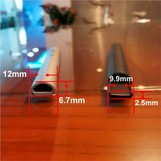
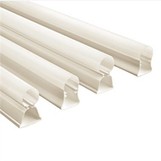
Our T8 Light Fixture Plastic Cover is made from premium acrylic, which offers excellent optical clarity and low light scattering. This allows the light to pass through the cover with minimal loss of color information, ensuring a high CRI. Our acrylic covers are also available in different thicknesses and surface finishes, allowing you to choose the option that best suits your specific application and lighting requirements.
In addition to our T8 LED fixture covers, we also offer T5 Light Fixture Plastic Cover and LED Light Fixture Housing. Our T5 light fixture covers are designed to provide the same high level of optical performance as our T8 covers, while our LED light fixture housings are engineered to protect the LED bulbs and ensure optimal light distribution.
Case Studies: The Impact of Our T8 LED Fixture Covers on CRI
To illustrate the effectiveness of our T8 LED fixture covers in maintaining or enhancing the CRI, let's take a look at some real-world case studies.
In a retail store, the store owner was experiencing issues with the lighting in the display areas. The previous T8 LED fixture covers were causing the light to appear dull and the colors of the products to look washed out. After installing our T8 Light Fixture Plastic Covers, the store owner noticed a significant improvement in the lighting quality. The colors of the products appeared more vibrant and true to life, and the CRI of the light increased from 80 to 90. This led to an increase in customer engagement and sales.
In a healthcare facility, accurate color rendering was crucial for medical professionals to make precise diagnoses. The facility was using T8 LED fixtures with covers that were reducing the CRI of the light. After switching to our high-quality T8 LED fixture covers, the CRI of the light improved from 75 to 92. This allowed the medical staff to more accurately assess the patients' conditions, leading to better treatment outcomes.
Conclusion
In conclusion, T8 LED fixture covers can have a significant impact on the color rendering index (CRI) of the light. The material, thickness, and surface finish of the fixture cover all play a role in how it interacts with light and affects the CRI. As a T8 LED fixture cover supplier, we are committed to providing high-quality products that can maintain or enhance the CRI of the light, ensuring optimal lighting performance in various applications.
If you're looking for T8 LED fixture covers that can provide excellent color rendering and enhance the overall lighting quality of your space, we invite you to contact us for more information. Our team of experts can help you choose the right fixture covers for your specific needs and provide you with a customized solution. Let's work together to create the perfect lighting environment for your project.
References
- "Color Rendering Index (CRI): A Guide to Understanding and Using It." Lighting Research Center, Rensselaer Polytechnic Institute.
- "Optical Properties of Materials for LED Lighting Applications." Journal of Lighting Research and Technology.
- "The Importance of Color Rendering in Lighting Design." Architectural Lighting Magazine.