
Hey there! As a supplier of LED light lenses, I've been getting a lot of questions lately about how thermal conductivity impacts the performance of these lenses. So, I thought I'd sit down and write this blog to share my insights on this topic.
First off, let's talk about what thermal conductivity is. In simple terms, thermal conductivity is a measure of how well a material can conduct heat. When it comes to LED light lenses, this property plays a crucial role in determining the overall performance and lifespan of the LED lighting system.
LEDs generate heat during operation. If this heat isn't dissipated properly, it can lead to a whole bunch of problems. For instance, high temperatures can cause the LED chips to degrade faster, reducing their brightness and color accuracy over time. It can also increase the risk of premature failure, which is definitely not something you want as a consumer or a lighting designer.
Now, let's dig into how the thermal conductivity of an LED light lens affects its performance.
Heat Dissipation
One of the primary functions of an LED light lens is to help dissipate the heat generated by the LED chips. A lens with high thermal conductivity can transfer heat away from the LEDs more efficiently, keeping the temperature of the lighting system in check. This is especially important in high - power LED applications, where a large amount of heat is produced.
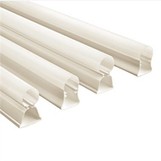
For example, in some industrial lighting setups or automotive lighting, the LEDs need to operate at high intensities. A lens with poor thermal conductivity will trap the heat close to the LEDs, causing them to overheat. On the other hand, a lens with good thermal conductivity, like some of the Extruded Linear Lens we offer, can quickly transfer the heat to the surrounding environment, ensuring that the LEDs operate at an optimal temperature.
Light Output and Color Stability
Heat can have a significant impact on the light output and color stability of LEDs. When an LED overheats, its light output can decrease, and the color of the light can shift. This is because the semiconductor materials in the LED chips are sensitive to temperature changes.
A lens with high thermal conductivity helps maintain a stable temperature around the LEDs, which in turn helps preserve the light output and color stability. This is crucial for applications where consistent lighting quality is required, such as in photography studios or art galleries. Our Plastic Diffuser Lens is designed with materials that have good thermal conductivity to ensure that the light output remains consistent over time.
Lens Durability
Excessive heat can also affect the durability of the LED light lens itself. High temperatures can cause the lens material to expand, contract, or even degrade over time. This can lead to cracks, warping, or yellowing of the lens, which not only affects the aesthetics but also the optical performance of the lighting system.
A lens with good thermal conductivity can reduce the thermal stress on the lens material. By efficiently transferring heat away, it helps prevent the material from being exposed to extreme temperature variations. This extends the lifespan of the lens and ensures that it continues to perform well over the long term. Our Lampshade PC Diffuser is made from high - quality materials with excellent thermal conductivity, providing long - lasting durability.
Optical Performance
In addition to heat - related issues, the thermal conductivity of a lens can also have a subtle impact on its optical performance. When a lens heats up unevenly due to poor thermal conductivity, it can cause thermal lensing effects. These effects can distort the light passing through the lens, leading to uneven illumination or reduced light efficiency.
A lens with uniform thermal conductivity helps maintain a consistent temperature distribution across the lens surface. This ensures that the light is refracted and diffused evenly, resulting in a more uniform and efficient light output.
Choosing the Right LED Light Lens
So, how do you choose an LED light lens with the right thermal conductivity for your application? Well, it depends on a few factors.
Firstly, consider the power of the LEDs. Higher - power LEDs generate more heat, so you'll need a lens with higher thermal conductivity. Secondly, think about the operating environment. If the lighting system will be used in a hot or enclosed space, a lens with better heat - dissipation capabilities is essential.
At our company, we offer a wide range of LED light lenses with different thermal conductivity properties. We can help you select the right lens based on your specific requirements. Whether you need a lens for a small residential lighting project or a large - scale commercial application, we've got you covered.
Conclusion
In conclusion, the thermal conductivity of an LED light lens has a profound impact on its performance. It affects heat dissipation, light output, color stability, lens durability, and optical performance. By choosing a lens with the right thermal conductivity, you can ensure that your LED lighting system operates efficiently, lasts longer, and provides high - quality lighting.


If you're in the market for LED light lenses and want to learn more about how our products can meet your needs, feel free to reach out. We're always happy to have a chat and help you find the perfect solution for your lighting project. Let's work together to create amazing lighting experiences!
References
- "Thermal Management of LED Lighting Systems" - Lighting Research Center
- "Effects of Temperature on LED Performance" - Optoelectronics Research Center