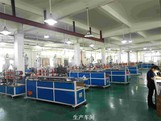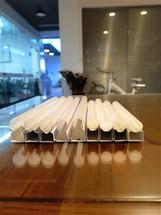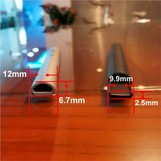

As a PVC pipe extrusion supplier, ensuring the consistency of extruded PVC pipes is crucial for maintaining high - quality products and meeting customer expectations. In this blog, I will share several key aspects and methods to guarantee the consistency of PVC pipes during the extrusion process.
1. Raw Material Selection and Quality Control
The quality of raw materials is the foundation for consistent PVC pipe production. PVC resin, additives, and fillers all play significant roles.
PVC Resin
When choosing PVC resin, we need to pay attention to its polymerization degree, which affects the mechanical properties of the final product. A consistent polymerization degree ensures that the pipes have uniform strength and flexibility. We should source PVC resin from reliable suppliers and conduct strict incoming inspections. Regularly test the resin's molecular weight distribution, bulk density, and volatile content. For example, a higher volatile content can lead to bubbles in the extruded pipes, affecting their appearance and performance.
Additives and Fillers
Additives such as heat stabilizers, lubricants, and impact modifiers are essential for the extrusion process and the performance of PVC pipes. Heat stabilizers prevent PVC from degrading at high temperatures during extrusion. The amount and quality of heat stabilizers need to be precisely controlled. Lubricants reduce friction between the PVC melt and the extrusion equipment, ensuring a smooth extrusion process. Impact modifiers improve the pipe's resistance to impact. Fillers, like calcium carbonate, can reduce costs, but their particle size and dispersion need to be consistent to avoid affecting the pipe's uniformity. We can refer to industry standards and conduct small - scale tests before large - scale production to determine the optimal formulation of additives and fillers.
2. Extrusion Equipment Maintenance and Calibration
Well - maintained and calibrated extrusion equipment is vital for consistent PVC pipe production.
Extruder
The extruder is the core equipment in the PVC pipe extrusion process. Regularly clean the screw and barrel of the extruder to prevent the accumulation of PVC residues, which can cause uneven melting and extrusion. Check the wear of the screw and barrel regularly. A worn - out screw may not convey the PVC melt uniformly, resulting in inconsistent pipe dimensions. Calibrate the temperature control system of the extruder accurately. Different zones of the extruder have different temperature requirements, and any deviation can affect the melting and flow of PVC. For example, if the temperature in the feeding zone is too high, the PVC resin may start to melt prematurely, leading to blockages.
Die and Calibration Equipment
The die determines the shape and size of the PVC pipes. Ensure that the die is clean and free from any damage. The die should be designed and manufactured with high precision to produce pipes with consistent outer and inner diameters. Calibration equipment, such as vacuum calibration tanks and sizing sleeves, is used to cool and shape the extruded pipes. Regularly check the water flow and temperature in the vacuum calibration tanks. Inconsistent water flow can cause uneven cooling, resulting in pipes with non - uniform wall thickness.
3. Process Parameter Optimization
Optimizing process parameters is an important step in ensuring the consistency of PVC pipes.


Screw Speed
The screw speed affects the output and quality of the extruded pipes. A too - high screw speed may cause the PVC melt to flow too fast, resulting in poor mixing and uneven distribution of additives. On the other hand, a too - low screw speed may lead to low production efficiency. We need to find the optimal screw speed based on the type of PVC resin, the size of the pipes, and the extrusion equipment. Conducting trials with different screw speeds and analyzing the quality of the produced pipes can help us determine the best speed.
Extrusion Temperature
Extrusion temperature has a significant impact on the melting and flow of PVC. Different PVC formulations require different extrusion temperatures. Generally, the temperature should be high enough to melt the PVC resin completely but not so high as to cause degradation. Monitor the temperature at different positions of the extruder and adjust it in real - time according to the actual situation. For example, if the melt pressure is too high, it may indicate that the temperature is too low, and vice versa.
Vacuum Degree in Calibration
The vacuum degree in the calibration equipment affects the shaping of the pipes. A proper vacuum degree can ensure that the pipes have a smooth surface and accurate dimensions. Adjust the vacuum degree according to the size and wall thickness of the pipes. Conduct tests to find the optimal vacuum degree for different pipe specifications.
4. Quality Control and Inspection
Implementing a strict quality control and inspection system is necessary to ensure the consistency of PVC pipes.
In - process Inspection
During the extrusion process, conduct regular in - process inspections. Check the appearance of the pipes, including surface smoothness, color uniformity, and the presence of any defects such as bubbles, cracks, or streaks. Measure the outer and inner diameters, wall thickness, and length of the pipes at regular intervals. Use precision measuring tools such as calipers and micrometers. If any non - conformities are found, adjust the process parameters immediately to correct the problem.
Final Product Inspection
After the pipes are produced, conduct a comprehensive final product inspection. In addition to the appearance and dimensional inspections, perform mechanical property tests such as tensile strength, impact strength, and hydrostatic pressure tests. These tests can ensure that the pipes meet the relevant industry standards and customer requirements. Keep records of all inspection results for traceability and continuous improvement.
5. Employee Training and Management
Well - trained and responsible employees are key to ensuring the consistency of PVC pipe production.
Training
Provide regular training for employees on PVC pipe extrusion technology, equipment operation, and quality control. Train them on how to identify and solve common problems during the extrusion process. For example, teach them how to adjust the extrusion temperature and screw speed based on the quality of the pipes. Training can also include safety knowledge to ensure a safe working environment.
Management
Establish a clear management system to ensure that employees follow the standard operating procedures. Set up performance evaluation indicators related to product quality and production efficiency. Encourage employees to report any problems or suggestions for improvement in a timely manner. By creating a positive work atmosphere, we can improve the overall quality of production.
6. Continuous Improvement
Continuous improvement is an important part of ensuring the long - term consistency of PVC pipe production.
Data Analysis
Collect and analyze production data, including process parameters, inspection results, and customer feedback. Identify any trends or patterns in the data. For example, if there is a recurring problem with the wall thickness of a certain size of pipes, analyze the relevant process parameters and raw material data to find the root cause.
Innovation and Technology Adoption
Keep an eye on the latest developments in PVC pipe extrusion technology. Adopt new materials, equipment, and processes that can improve the quality and consistency of the pipes. For example, new types of heat stabilizers or more advanced extrusion equipment with better temperature control and mixing capabilities can enhance the production process.
In conclusion, ensuring the consistency of extruded PVC pipes requires a comprehensive approach, including raw material selection, equipment maintenance, process parameter optimization, quality control, employee training, and continuous improvement. As a PVC pipe extrusion supplier, we are committed to providing high - quality and consistent PVC pipes to our customers. If you are interested in Custom Plastic Extrusion, Irregular Plastic Lampshade, or PC Lamp Cover, or if you have any purchasing needs for PVC pipes, please feel free to contact us for further discussions.
References
- "Handbook of PVC Pipe Extrusion Technology", XYZ Publishing
- Industry standards for PVC pipes, such as ASTM D2241, ISO 4427, etc.
- Research papers on PVC extrusion process optimization from academic journals.