
As a supplier of T5 LED fixture covers, I've often been asked about the impact of air pollution on these products. In this blog post, I'll delve into the scientific aspects of how air pollution can affect T5 LED fixture covers and provide insights based on my years of experience in the industry.
Understanding T5 LED Fixture Covers
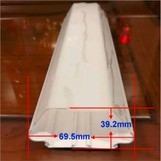
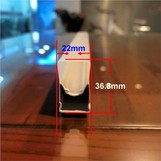
T5 LED fixture covers are typically made from high - quality plastics such as polycarbonate or acrylic. These materials are chosen for their transparency, durability, and ability to protect the LED bulbs inside. They play a crucial role in diffusing light evenly, reducing glare, and protecting the lighting components from physical damage.
Types of Air Pollution and Their Potential Effects
Air pollution consists of various pollutants, including particulate matter (PM), sulfur dioxide (SO₂), nitrogen oxides (NOₓ), and volatile organic compounds (VOCs). Each of these pollutants can have different effects on T5 LED fixture covers.
Particulate Matter (PM)
Particulate matter is a mixture of solid particles and liquid droplets in the air. It can range in size from coarse dust particles to fine particles known as PM2.5 (particles with a diameter of 2.5 micrometers or less) and ultrafine particles.
When PM accumulates on the surface of T5 LED fixture covers, it can reduce the light transmission. The particles act as a barrier, scattering and absorbing light, which results in a decrease in the overall brightness of the lighting fixture. Over time, a thick layer of PM can also cause the cover to look dirty and unappealing.
In areas with high levels of industrial activity or heavy traffic, the deposition of PM on T5 LED fixture covers can be more significant. For example, in a manufacturing area where there is a lot of dust and debris in the air, the covers may need to be cleaned more frequently to maintain optimal lighting performance.
Sulfur Dioxide (SO₂)
Sulfur dioxide is a colorless gas with a pungent odor. It is mainly produced by the burning of fossil fuels, such as coal and oil, in power plants and industrial processes.
SO₂ can react with moisture in the air to form sulfuric acid, which is a corrosive substance. When T5 LED fixture covers are exposed to sulfuric acid, the plastic material can be damaged. The acid can cause the surface of the cover to become dull, brittle, and may even lead to cracking over time. This not only affects the appearance of the fixture but also compromises its structural integrity and light - diffusing properties.
Nitrogen Oxides (NOₓ)
Nitrogen oxides are a group of gases that include nitrogen monoxide (NO) and nitrogen dioxide (NO₂). They are produced by high - temperature combustion processes, such as those in vehicle engines and power plants.
NOₓ can react with other pollutants in the air to form ozone (O₃) and nitric acid. Ozone is a powerful oxidizing agent that can cause the plastic in T5 LED fixture covers to degrade. It can break down the chemical bonds in the plastic, leading to discoloration, loss of transparency, and reduced mechanical strength. Nitric acid, on the other hand, can corrode the plastic surface, similar to sulfuric acid.
Volatile Organic Compounds (VOCs)
VOCs are organic chemicals that have a high vapor pressure at room temperature. They are emitted from a wide range of sources, including paints, solvents, cleaning products, and building materials.
Some VOCs can dissolve or swell the plastic in T5 LED fixture covers. This can cause the cover to warp, distort, or lose its shape. Additionally, certain VOCs can react with the plastic, leading to chemical changes that affect the optical properties of the cover.


Mitigating the Effects of Air Pollution
To minimize the impact of air pollution on T5 LED fixture covers, several measures can be taken.
Regular Cleaning
Regular cleaning of the covers is one of the simplest and most effective ways to prevent the accumulation of PM and other pollutants. Using a mild detergent and a soft cloth, the covers can be gently wiped clean. However, it's important to avoid using abrasive cleaners or rough materials that could scratch the surface of the cover.
Protective Coatings
Applying a protective coating to the T5 LED fixture covers can provide an additional layer of defense against air pollution. These coatings can be designed to resist the effects of chemicals, UV radiation, and particulate matter. Some coatings can also make the surface of the cover more hydrophobic, which means that water and pollutants are less likely to stick to it.
Indoor Installation
Installing T5 LED fixtures indoors can significantly reduce their exposure to outdoor air pollution. Indoor environments typically have lower levels of pollutants compared to outdoor environments. However, it's still important to consider the sources of indoor air pollution, such as cleaning products and building materials, and take appropriate measures to minimize their impact.
Our Product Offerings
As a supplier, we offer a wide range of T5 LED fixture covers that are designed to withstand various environmental conditions. Our covers are made from high - quality materials that have excellent resistance to chemicals, UV radiation, and physical damage.
In addition to T5 LED fixture covers, we also provide related products such as T8 Light Fixture Plastic Cover, T5 Fixture Housing, and T8 Fixture Housing. These products are designed to work together to provide a complete lighting solution.
Conclusion
Air pollution can have a significant impact on T5 LED fixture covers. The various pollutants in the air, such as particulate matter, sulfur dioxide, nitrogen oxides, and volatile organic compounds, can cause damage to the plastic material, reduce light transmission, and affect the overall performance and appearance of the covers.
However, by taking appropriate measures such as regular cleaning, using protective coatings, and considering indoor installation, the effects of air pollution can be mitigated. As a supplier, we are committed to providing high - quality products that can withstand the challenges posed by air pollution and other environmental factors.
If you are interested in purchasing T5 LED fixture covers or any of our other lighting products, we invite you to contact us for a detailed discussion about your specific requirements. We look forward to working with you to meet your lighting needs.
References
- "Air Quality Guidelines for Europe", World Health Organization.
- "Plastics in the Environment: Properties, Impact, and Sustainability", Elsevier.
- "Handbook of Plastic Materials and Technology", John Wiley & Sons.