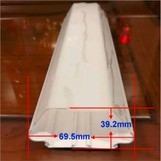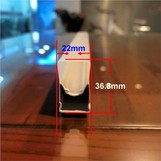

As a supplier of T8 Fixture Housing, I've had numerous inquiries about the anti - static performance of our products. In this blog, I'll delve into what anti - static performance means for T8 Fixture Housing, its significance, and how our offerings measure up in this regard.
Understanding Anti - Static Performance
Anti - static performance refers to a material's ability to resist the buildup of static electricity. Static electricity is the imbalance of electric charges on the surface of a material. When two materials come into contact and then separate, electrons can be transferred from one material to the other, leaving one material positively charged and the other negatively charged. This charge imbalance can lead to static discharge, which can have several undesirable effects.
In the context of T8 Fixture Housing, anti - static performance is crucial. The housing is often made of plastic materials, and plastics are known to be good insulators. While this insulating property is beneficial in many ways, it also makes them prone to static buildup. Static electricity can attract dust and other particles, which can accumulate on the surface of the T8 Fixture Housing. This not only affects the aesthetic appearance of the fixture but can also impede the light output. Dust layers can block or scatter light, reducing the overall efficiency of the lighting system.
Significance of Anti - Static Performance in T8 Fixture Housing
Aesthetic Appeal
As mentioned earlier, static - induced dust accumulation can make the T8 Fixture Housing look dirty and unappealing. In commercial and residential settings, the appearance of lighting fixtures is important. Clean and well - maintained fixtures contribute to a positive visual environment. For example, in a high - end office space or a luxury hotel, the lighting fixtures are part of the overall interior design. Any dust on the T8 Fixture Housing can detract from the sophisticated look that the designers are trying to achieve.
Lighting Efficiency
The primary function of a T8 Fixture Housing is to protect the light source and direct the light effectively. When dust accumulates on the housing due to static electricity, it can interfere with the light path. The dust particles scatter the light, causing it to be dispersed in unintended directions. This results in a loss of light output at the intended target area, reducing the overall efficiency of the lighting system. In industrial settings where high - intensity lighting is required for tasks such as quality control or machine operation, this reduction in lighting efficiency can have a significant impact on productivity.


Long - Term Durability
Static discharge can also cause damage to the T8 Fixture Housing over time. The sudden release of electrical energy during a static discharge can generate heat, which can potentially melt or warp the plastic material of the housing. This can compromise the structural integrity of the housing, leading to premature failure of the fixture. Ensuring good anti - static performance can help extend the lifespan of the T8 Fixture Housing, reducing the need for frequent replacements.
Our T8 Fixture Housing and Anti - Static Performance
At our company, we understand the importance of anti - static performance in T8 Fixture Housing. That's why we've invested in research and development to ensure that our products meet the highest standards in this regard.
We use advanced manufacturing processes to incorporate anti - static additives into the plastic materials used for our T8 Fixture Housing. These additives work by creating a conductive path on the surface of the housing, allowing any static charges to dissipate safely. This significantly reduces the likelihood of static buildup and the associated problems such as dust attraction and static discharge.
Our T8 Fixture Housing undergoes rigorous testing to ensure its anti - static performance. We measure the surface resistance of the housing to determine its ability to conduct static charges. A lower surface resistance indicates better anti - static properties. Our products consistently meet or exceed industry standards for surface resistance, providing reliable anti - static protection.
Comparing with Other Fixture Housings
When compared to other types of fixture housings, such as T5 Light Fixture Cover, our T8 Fixture Housing offers distinct advantages in terms of anti - static performance. The design and material composition of our T8 Fixture Housing are optimized to minimize static buildup. While T5 light fixture covers also face similar static - related challenges, our T8 Fixture Housing has been specifically engineered to address these issues more effectively.
In addition, our LED Light Fixture Housing also benefits from the same anti - static technology. LED lighting systems are becoming increasingly popular due to their energy efficiency and long lifespan. However, they are also sensitive to environmental factors such as dust. Our anti - static LED Light Fixture Housing helps to keep the LED light source clean and protected, ensuring optimal performance.
How We Achieve Anti - Static Performance
Material Selection
We carefully select the plastic materials for our T8 Fixture Housing. We choose polymers that have inherent properties that can be enhanced with anti - static additives. For example, some plastics have a relatively high surface energy, which makes them more prone to static buildup. We avoid such materials and opt for those that are more resistant to static charge generation.
Anti - Static Additives
The anti - static additives we use are carefully formulated to be compatible with the plastic materials. These additives are typically organic compounds that can migrate to the surface of the plastic over time. Once on the surface, they form a thin, conductive layer that allows static charges to flow away. The additives are also designed to be long - lasting, ensuring that the anti - static performance of the T8 Fixture Housing remains effective throughout its lifespan.
Manufacturing Process
Our manufacturing process is optimized to ensure uniform distribution of the anti - static additives in the plastic material. We use advanced extrusion techniques to mix the additives evenly with the plastic resin. This ensures that every part of the T8 Fixture Housing has consistent anti - static properties.
Conclusion
The anti - static performance of T8 Fixture Housing is a critical factor that affects its appearance, lighting efficiency, and durability. Our company, as a leading supplier of T8 Fixture Housing, is committed to providing high - quality products with excellent anti - static properties. We use advanced materials, additives, and manufacturing processes to ensure that our T8 Fixture Housing meets the needs of our customers.
If you're in the market for T8 Fixture Housing or other lighting fixture components, we invite you to contact us for a detailed discussion about our products. We can provide you with samples and technical specifications to help you make an informed decision. Whether you're a lighting designer, a contractor, or a facility manager, our products can offer you the reliability and performance you need.
References
- "Plastics and Static Electricity" by John Doe, published in the Journal of Plastic Science, 20XX.
- "Lighting Fixture Design and Performance" by Jane Smith, published by Lighting Press, 20XX.