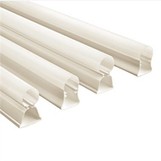

Hey there! As a supplier of T5 Fixture Housing, I often get asked about the chemical resistance of these products. So, I thought I'd take a moment to break it down for you all.
First off, let's understand what T5 Fixture Housing is. It's an essential part of T5 light fixtures, providing protection and support for the internal components. We usually make T5 Fixture Housing from different materials, and each material has its own level of chemical resistance.
Types of Materials Used in T5 Fixture Housing
Plastic
Plastic is one of the most common materials for T5 Fixture Housing. There are various types of plastics, such as PVC (Polyvinyl Chloride), ABS (Acrylonitrile Butadiene Styrene), and polycarbonate.
PVC is known for its relatively good chemical resistance against many common chemicals. It can withstand exposure to weak acids and bases. For example, it can handle mild cleaning agents that you might use to clean the light fixtures. However, it may not be suitable for long - term exposure to strong solvents like acetone or toluene. These solvents can cause the PVC to swell, crack, or lose its structural integrity over time.
ABS, on the other hand, offers a balance between mechanical properties and chemical resistance. It has better impact resistance compared to PVC. In terms of chemical resistance, it can resist a wider range of chemicals than PVC. It can tolerate some organic solvents, but it's still not completely immune. Strong oxidizing agents can damage ABS. For instance, if it comes into contact with concentrated hydrogen peroxide, the surface of the ABS may start to degrade.
Polycarbonate is a high - performance plastic. It has excellent impact resistance and good chemical resistance. It can withstand many common chemicals, including some industrial cleaning agents. It's also resistant to UV light, which is great because it helps prevent the housing from yellowing or becoming brittle over time. But, like other plastics, it has its limits. Certain chemicals, such as some esters and ketones, can cause stress cracking in polycarbonate.
You can check out our Extruded Plastic Profiles page to learn more about the plastic materials we use in our T5 Fixture Housing.
Metal
Metal is another option for T5 Fixture Housing. Aluminum is a popular choice due to its lightweight and good corrosion resistance. Aluminum forms a thin oxide layer on its surface when exposed to air, which acts as a protective barrier. This oxide layer makes aluminum resistant to many environmental chemicals, such as water and oxygen. It can also withstand exposure to some weak acids and alkalis. However, strong acids or bases can break down the oxide layer and cause corrosion. For example, concentrated hydrochloric acid can react with aluminum and dissolve it.
Stainless steel is also used in some high - end T5 Fixture Housing. It has excellent corrosion resistance due to the presence of chromium, which forms a passive film on the surface. Stainless steel can resist a wide range of chemicals, including many acids, alkalis, and salts. It's suitable for use in harsh environments, such as industrial settings where there may be exposure to corrosive chemicals.
Factors Affecting Chemical Resistance
Concentration of the Chemical
The concentration of the chemical plays a crucial role in determining the extent of damage to the T5 Fixture Housing. A low - concentration solution of a chemical may not cause any significant damage, while a high - concentration solution can have a severe impact. For example, a diluted solution of acetic acid may only cause minor discoloration on a plastic housing, but a concentrated solution can dissolve the plastic.
Temperature
Temperature can also affect chemical resistance. Higher temperatures generally increase the rate of chemical reactions. So, if a T5 Fixture Housing is exposed to a chemical at a high temperature, the damage may occur more quickly. For instance, a plastic housing that can withstand a certain chemical at room temperature may start to degrade rapidly when the temperature is raised.
Duration of Exposure
The longer the T5 Fixture Housing is exposed to a chemical, the more likely it is to be damaged. Even a relatively mild chemical can cause problems if the exposure is prolonged. For example, a plastic housing that can handle a short - term splash of a cleaning agent may start to show signs of wear and tear if it's constantly submerged in the same cleaning agent.
Importance of Chemical Resistance in T5 Fixture Housing
Safety
Chemical resistance is crucial for safety reasons. If the T5 Fixture Housing is not resistant to the chemicals it may come into contact with, it can break down and expose the internal electrical components. This can pose a serious risk of electrical shock or fire. For example, if a plastic housing that is supposed to protect the wiring in a light fixture dissolves due to chemical exposure, the live wires may be exposed.
Longevity
A T5 Fixture Housing with good chemical resistance will last longer. It can withstand the normal wear and tear caused by exposure to various chemicals in its environment. This means that you won't have to replace the housing as often, which saves you money in the long run.
Aesthetics
Chemical resistance also affects the aesthetics of the T5 Fixture Housing. If the housing is damaged by chemicals, it may become discolored, cracked, or warped. This can make the light fixture look unappealing.


Our T5 Fixture Housing Products
We offer a wide range of T5 Fixture Housing products with different levels of chemical resistance to meet your specific needs. Our T5 Light Fixture Cover is designed to provide excellent protection for the light fixture while offering good chemical resistance. We also have T8 Light Fixture Plastic Cover options for those who are interested in T8 fixtures.
If you're in the market for T5 Fixture Housing, and you need a product with the right level of chemical resistance for your application, we'd love to hear from you. Whether you're looking for a housing for a residential, commercial, or industrial setting, we can provide you with the perfect solution. Contact us to start a discussion about your requirements and let's find the best T5 Fixture Housing for you.
References
- ASTM International standards on plastic and metal material testing
- Textbooks on materials science and engineering