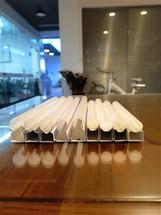

Hey there! As a supplier of Modified ABS, I often get asked about how the UV resistance of Modified ABS stacks up against regular ABS. So, I thought I'd take a deep dive into this topic and share some insights with you all.
First off, let's talk a bit about what ABS is. ABS, or Acrylonitrile Butadiene Styrene, is a common thermoplastic polymer that's widely used in a whole bunch of industries. It's known for its toughness, rigidity, and good processability. Regular ABS is great for many applications, but it does have its limitations, especially when it comes to UV resistance.
When regular ABS is exposed to UV light, it can start to degrade over time. The UV rays break down the polymer chains in the ABS, which can lead to a bunch of problems. For example, the color of the ABS can start to fade, making it look less appealing. It can also become more brittle, which means it's more likely to crack or break under stress. This is a big issue for products that are going to be used outdoors or in environments where they'll be exposed to a lot of sunlight.
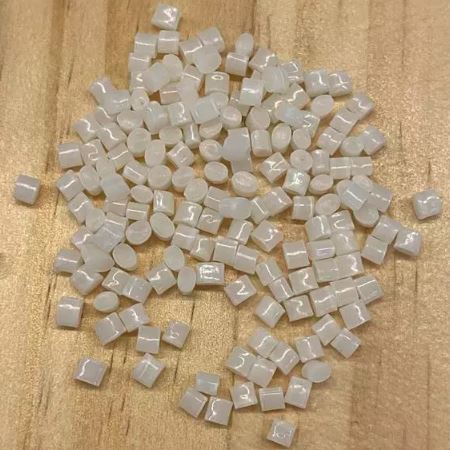
Now, let's move on to Modified ABS. Modified ABS is basically regular ABS that has been tweaked to improve its properties. There are different types of Modified ABS, each designed for specific applications. For instance, we have General Grade ABS, which is a versatile option suitable for a wide range of uses. Then there's Reinforced Modified ABS, which has been strengthened to handle more demanding conditions. And we also offer Electroplating Grade ABS, which is ideal for products that need to be electroplated.
One of the key modifications that can be made to ABS is to improve its UV resistance. This is done by adding special additives to the ABS during the manufacturing process. These additives act as a shield, absorbing or reflecting the UV rays before they can damage the polymer chains. As a result, Modified ABS with enhanced UV resistance can withstand much longer exposure to sunlight without showing significant signs of degradation.
Let's take a closer look at some of the benefits of using Modified ABS with good UV resistance.
1. Longer Lifespan
Products made from Modified ABS with high UV resistance are going to last a lot longer than those made from regular ABS. This is especially important for outdoor applications, like automotive parts, outdoor furniture, and signage. If you're using regular ABS in these applications, you might find that the parts need to be replaced more frequently due to UV damage. But with Modified ABS, you can expect the products to maintain their integrity and appearance for a much longer time.
2. Better Aesthetics
As I mentioned earlier, regular ABS can fade and lose its color when exposed to UV light. This can be a real problem if you're using ABS for products where appearance matters, like consumer electronics or display cases. Modified ABS with good UV resistance will keep its color and finish for a long time, so your products will always look their best.
3. Improved Performance
When ABS becomes brittle due to UV degradation, its mechanical properties can be significantly affected. This can lead to a decrease in strength and impact resistance, which can be a safety concern in some applications. Modified ABS with enhanced UV resistance maintains its mechanical properties even after long-term exposure to sunlight, ensuring that your products perform as expected.
4. Cost-Effectiveness
While Modified ABS might be a bit more expensive than regular ABS upfront, the long-term cost savings can be significant. Since products made from Modified ABS last longer, you won't have to spend as much on replacements and repairs. This can be a big advantage for businesses that are looking to reduce their overall costs.
Now, you might be wondering how we test the UV resistance of our Modified ABS. Well, we use a variety of methods to ensure that our products meet the highest standards. One of the most common tests is the xenon arc test. In this test, samples of the Modified ABS are exposed to intense UV light in a controlled environment that simulates outdoor conditions. We measure the changes in color, gloss, and mechanical properties over time to determine how well the material resists UV degradation.
We also conduct real-world testing by placing samples of our Modified ABS in outdoor locations for extended periods. This allows us to see how the material performs under actual sunlight and weather conditions. By combining these different testing methods, we can be confident that our Modified ABS offers superior UV resistance compared to regular ABS.
So, if you're in the market for a plastic material that can withstand UV exposure, Modified ABS is definitely the way to go. Whether you're a manufacturer looking for high-quality materials for your products or a designer in need of a durable and aesthetically pleasing option, our Modified ABS can meet your needs.
If you're interested in learning more about our Modified ABS products or want to discuss your specific requirements, don't hesitate to reach out. We're here to help you find the best solution for your project. Let's start a conversation and see how we can work together to bring your ideas to life.

References
- "Plastics Engineering Handbook of the Society of Plastics Engineers", Third Edition, edited by Joel R. Frados
- "Polymer Science and Technology", Second Edition, by Charles A. Daniels and James F. Mark