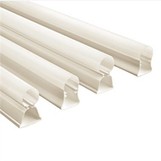

As a supplier of Modified ABS, I am frequently asked about the electrical insulation properties of this remarkable material. In this blog post, I will delve into the intricacies of the electrical insulation characteristics of Modified ABS, exploring its composition, factors affecting insulation, and its applications in various industries.
Composition and Basics of Modified ABS
ABS, or Acrylonitrile Butadiene Styrene, is a common thermoplastic polymer known for its good mechanical properties, impact resistance, and ease of processing. Modified ABS is a variant where the base ABS resin is enhanced with additives, fillers, or other polymers to achieve specific performance improvements. These modifications can be tailored to meet a wide range of requirements, such as Reinforced Modified ABS, Heat Resistance Grade ABS, and Flame Retardant ABS.
The electrical insulation property of Modified ABS stems from its molecular structure. ABS is composed of three monomers: acrylonitrile, butadiene, and styrene. The acrylonitrile component provides chemical resistance and hardness, the butadiene imparts toughness and impact resistance, and the styrene contributes to the rigidity and processability. These polymers have long chains of molecules with covalent bonds, which restrict the movement of electrons. As a result, ABS and its modified forms generally exhibit good electrical insulation characteristics.
Factors Affecting Electrical Insulation of Modified ABS
Additives and Fillers
The type and amount of additives and fillers used in the modification process can significantly impact the electrical insulation of Modified ABS. For example, adding conductive fillers such as carbon black or metal particles can reduce the insulation resistance and turn the material into a semi - conductor or conductor. On the other hand, non - conductive fillers like glass fibers or talc can maintain or even improve the insulation properties in some cases. Glass fibers, for instance, can enhance the mechanical strength of the material without significantly affecting its electrical insulation.
Moisture Absorption
Moisture can have a detrimental effect on the electrical insulation of Modified ABS. Water is a good conductor of electricity, and when absorbed by the material, it can create pathways for the flow of electric current. The acrylonitrile component in ABS has a certain affinity for water, and high humidity environments can lead to increased moisture absorption. To mitigate this issue, additives can be used to reduce the water absorption rate or a protective coating can be applied to the surface of the product.


Temperature
Temperature also plays a crucial role in the electrical insulation performance of Modified ABS. As the temperature increases, the mobility of polymer chains and the ions within the material also increases. This can lead to a decrease in the insulation resistance. In high - temperature applications, it is essential to choose a Heat Resistance Grade ABS that can maintain its electrical insulation properties over a wide temperature range.
Contamination
Contamination from dust, dirt, or chemicals can compromise the electrical insulation of Modified ABS. These contaminants can accumulate on the surface of the material and form conductive paths. Regular cleaning and proper handling of the products can help prevent such contamination.
Measuring Electrical Insulation Properties
There are several methods to measure the electrical insulation properties of Modified ABS. One of the most common parameters is the volume resistivity, which is a measure of the resistance of a unit volume of the material to the flow of electric current. It is typically expressed in ohm - centimeters (Ω·cm). A higher volume resistivity indicates better electrical insulation.
Another important parameter is the surface resistivity, which measures the resistance of the surface of the material to the flow of electric current. It is expressed in ohms per square (Ω/sq). Surface resistivity is particularly important in applications where surface leakage currents need to be minimized.
Dielectric strength is also a critical property. It is the maximum electric field that a material can withstand without breaking down and allowing current to flow. Dielectric strength is usually expressed in volts per unit thickness (V/mil or kV/mm).
Applications of Modified ABS Based on Electrical Insulation
Electrical and Electronics Industry
Modified ABS is widely used in the electrical and electronics industry due to its excellent electrical insulation properties. It is used in the manufacture of electrical enclosures, such as those for circuit breakers, switches, and control panels. The insulation properties of Modified ABS protect the internal electrical components from external electrical interference and prevent electrical shock hazards.
In the production of consumer electronics, such as smartphones, laptops, and televisions, Modified ABS is used for the outer casings. These casings not only provide mechanical protection but also act as electrical insulators, ensuring the safe operation of the devices.
Automotive Industry
In the automotive industry, Modified ABS is used in various electrical components. For example, it is used in the manufacturing of connectors, sensors, and dashboard components. The electrical insulation properties of Modified ABS are essential to prevent short - circuits and ensure the reliable operation of the vehicle's electrical systems.
Home Appliances
Many home appliances, such as refrigerators, washing machines, and microwave ovens, use Modified ABS for their electrical parts. The insulation properties of the material help to ensure the safety and proper functioning of these appliances.
Advantages of Using Modified ABS for Electrical Insulation
Cost - Effectiveness
Compared to some other high - performance electrical insulation materials, Modified ABS is relatively cost - effective. It offers a good balance between cost and performance, making it a popular choice for a wide range of applications.
Processability
Modified ABS can be easily processed using various methods such as injection molding, extrusion, and thermoforming. This allows for the production of complex shapes and designs, which is highly beneficial in the manufacturing of electrical components.
Customizability
As a supplier, we can customize the properties of Modified ABS according to the specific requirements of our customers. Whether it is enhancing the insulation properties, improving the mechanical strength, or adding flame retardancy, we can formulate the material to meet the exact needs of different applications.
Conclusion
The electrical insulation property of Modified ABS is a key characteristic that makes it a valuable material in many industries. Its performance is influenced by factors such as additives, moisture, temperature, and contamination. By carefully selecting the appropriate additives and fillers and controlling the processing conditions, we can optimize the electrical insulation properties of Modified ABS.
If you are in need of a reliable Modified ABS supplier for your electrical insulation applications, we are here to help. Our team of experts can work with you to develop the perfect solution for your specific requirements. Contact us to start a procurement discussion and explore how our Modified ABS products can meet your needs.
References
- Plastics Additives Handbook, 6th Edition, Edited by Hans Zweifel
- Engineering Plastics: Properties and Applications, Second Edition, by D. V. Rosato, D. V. Rosato, and M. G. Rosato
- Polymer Science and Technology, by James E. Mark