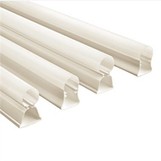

Hey there! As a supplier in the PVC Pipe Extrusion business, I've been getting a lot of questions lately about the impact resistance of extruded PVC pipes. So, I thought I'd take a deep dive into this topic and share some insights with you all.
First off, let's talk about what impact resistance actually means. In simple terms, it's the ability of a material to withstand sudden forces or impacts without breaking or cracking. For PVC pipes, this is super important because they're used in a wide range of applications, from plumbing systems in our homes to irrigation projects in the agricultural sector. If a PVC pipe can't handle the occasional bump or jolt, it could lead to leaks, blockages, and all sorts of headaches.
Now, what makes extruded PVC pipes have good impact resistance? Well, it all starts with the manufacturing process. PVC Pipe Extrusion is a technique where PVC resin is melted and forced through a die to create a continuous profile in the shape of a pipe. During this process, additives are often mixed with the PVC resin to enhance its properties, including impact resistance.
One of the key additives used is impact modifiers. These are substances that help to toughen the PVC material, making it more flexible and better able to absorb energy from impacts. There are different types of impact modifiers, such as acrylonitrile - butadiene - styrene (ABS) and chlorinated polyethylene (CPE). ABS is known for its high impact strength and good chemical resistance, while CPE offers excellent weatherability and low - temperature impact performance.
Another factor that affects the impact resistance of extruded PVC pipes is the wall thickness. Generally speaking, pipes with thicker walls tend to have better impact resistance. This is because a thicker wall provides more material to absorb and distribute the force of an impact. However, it's not just about making the walls as thick as possible. There's a balance to be struck, as thicker walls also mean higher material costs and potentially more difficulty in installation.


The quality of the raw materials used also plays a crucial role. High - quality PVC resin will have more consistent properties, which is essential for ensuring good impact resistance. Suppliers need to source their PVC resin from reliable manufacturers and conduct strict quality control checks to make sure the resin meets the required standards.
Now, let's look at some real - world scenarios where the impact resistance of extruded PVC pipes matters. In underground plumbing systems, pipes are often buried in the ground, where they can be subjected to external forces from soil movement, heavy machinery, or even accidental digging. A pipe with poor impact resistance might crack or break under these conditions, leading to water leaks and damage to the surrounding area.
In industrial settings, PVC pipes are used to transport various chemicals and fluids. These pipes may be exposed to vibrations, shocks, and impacts during normal operation. If the pipes can't withstand these forces, it could result in spills and safety hazards.
In the construction of buildings, PVC pipes are used for drainage and ventilation systems. They need to be able to resist impacts during installation and throughout the building's lifespan. For example, during the construction process, workers may accidentally drop tools or equipment on the pipes, and the pipes need to be able to handle these impacts without damage.
When it comes to testing the impact resistance of extruded PVC pipes, there are several standard methods. One common test is the Charpy impact test, where a notched specimen of the PVC pipe is struck with a pendulum, and the energy absorbed during the fracture is measured. Another test is the Izod impact test, which is similar but uses a different specimen configuration. These tests provide valuable data on the impact performance of the pipes and help manufacturers ensure that their products meet the required standards.
As a PVC Pipe Extrusion supplier, I understand the importance of providing pipes with excellent impact resistance. That's why we invest a lot of time and resources in research and development to improve our manufacturing processes and select the best additives and raw materials. We also conduct regular quality control tests to make sure that every pipe we produce meets or exceeds the industry standards.
If you're in the market for high - quality extruded PVC pipes with great impact resistance, you've come to the right place. We offer a wide range of PVC pipes that are suitable for various applications. Whether you need pipes for your home plumbing system, an industrial project, or an agricultural irrigation scheme, we've got you covered.
You can also check out some of our other products related to extrusion. For example, we have Irregular Plastic Lampshade and Extrusion Plastic Profile. These products are also manufactured using advanced extrusion techniques and high - quality materials.
If you're interested in learning more about our PVC Pipe Extrusion products or have any questions about impact resistance, don't hesitate to reach out. We're always happy to have a chat and help you find the right solutions for your needs. Whether you're a contractor, a builder, or a DIY enthusiast, we can provide you with the pipes you need to get the job done right.
In conclusion, the impact resistance of extruded PVC pipes is a critical property that depends on factors like additives, wall thickness, and raw material quality. As a supplier, we're committed to providing products that offer excellent impact resistance and meet the diverse needs of our customers. So, if you're looking for reliable PVC pipes, give us a shout, and let's start a conversation about your project.
References
- ASTM International. (Year). Standard test methods for impact resistance of plastics and electrical insulating materials.
- Plastics Pipe Institute. (Year). Technical guidelines for PVC pipe manufacturing and application.