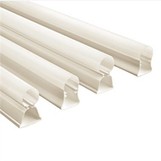

As an Extruded Aluminium supplier, I've witnessed firsthand the pivotal role that lubricants play in the aluminium extrusion process. Aluminium extrusion is a manufacturing process where aluminium alloy is forced through a die with a specific cross-sectional profile. It's a method widely used to create parts with complex cross-sections for various industries, including construction, automotive, and electronics. In this blog, I'll delve into the significance of lubricants in aluminium extrusion, exploring their functions, types, and the impact they have on the final product.
The Functions of Lubricants in Aluminium Extrusion
Reducing Friction
One of the primary functions of lubricants in aluminium extrusion is to reduce friction between the aluminium billet and the extrusion die. During the extrusion process, the billet is pushed through the die at high pressure and speed. Without proper lubrication, the friction between the billet and the die can cause excessive wear on the die surface, leading to premature die failure. Moreover, high friction can also result in increased extrusion forces, which require more energy to operate the extrusion press. By applying a lubricant, the coefficient of friction is significantly reduced, allowing for smoother material flow and less wear on the die. This not only extends the lifespan of the die but also reduces energy consumption, making the extrusion process more efficient.
Preventing Sticking
Another crucial function of lubricants is to prevent the aluminium from sticking to the die. When the aluminium billet is forced through the die, it can adhere to the die surface due to the high pressure and temperature involved. This sticking phenomenon, known as galling, can cause surface defects on the extruded product, such as scratches and rough spots. Lubricants create a thin film between the billet and the die, acting as a barrier that prevents direct contact between the two surfaces. This film reduces the adhesion between the aluminium and the die, ensuring that the extruded product has a smooth and defect-free surface.
Controlling Temperature
The extrusion process generates a significant amount of heat due to the deformation of the aluminium billet and the friction between the billet and the die. Excessive heat can have detrimental effects on the quality of the extruded product, such as grain growth and surface oxidation. Lubricants help to control the temperature during the extrusion process by dissipating heat. They act as a heat transfer medium, carrying the heat away from the contact area between the billet and the die. This helps to maintain a stable temperature throughout the extrusion process, ensuring that the extruded product has consistent mechanical properties and a high-quality surface finish.
Types of Lubricants Used in Aluminium Extrusion
Graphite-Based Lubricants
Graphite-based lubricants are one of the most commonly used lubricants in aluminium extrusion. Graphite is a solid lubricant that has excellent lubricating properties and high thermal stability. It can withstand high temperatures and pressures, making it suitable for use in the demanding environment of aluminium extrusion. Graphite-based lubricants are typically applied as a suspension in water or oil. They form a thin, dry film on the die surface, which provides effective lubrication and prevents the aluminium from sticking to the die.
Molybdenum Disulfide (MoS₂) Lubricants
Molybdenum disulfide is another popular solid lubricant used in aluminium extrusion. MoS₂ has a layered structure that allows it to slide easily between surfaces, providing low friction and excellent lubrication. It has good thermal stability and can withstand high pressures, making it suitable for use in high-speed extrusion processes. MoS₂ lubricants are often applied as a dry powder or in a suspension in oil. They can be used alone or in combination with other lubricants to enhance their performance.
Synthetic Lubricants
Synthetic lubricants are a relatively new type of lubricant used in aluminium extrusion. They are formulated from synthetic polymers and additives, which offer several advantages over traditional lubricants. Synthetic lubricants have excellent thermal stability, low volatility, and high resistance to oxidation and corrosion. They can provide superior lubrication and protection in extreme conditions, making them ideal for use in high-performance extrusion processes. Synthetic lubricants are typically applied as a liquid or a semi-solid, and they can be customized to meet the specific requirements of different extrusion applications.
The Impact of Lubricants on the Final Product
Surface Quality
The choice of lubricant can have a significant impact on the surface quality of the extruded product. A high-quality lubricant can help to achieve a smooth and defect-free surface finish, which is essential for many applications. For example, in the production of LED Aluminum Profile, a smooth surface finish is required to ensure proper heat dissipation and optimal light distribution. Lubricants that prevent sticking and reduce friction can help to eliminate surface defects such as scratches and rough spots, resulting in a high-quality product.
Dimensional Accuracy
Lubricants also play a role in maintaining the dimensional accuracy of the extruded product. By reducing friction and controlling temperature, lubricants can help to minimize the deformation and shrinkage of the aluminium during the extrusion process. This ensures that the extruded product has the correct dimensions and tolerances, which is crucial for applications where precise fit and function are required. For instance, in the production of Extruded Aluminum Profiles for the construction industry, dimensional accuracy is essential to ensure proper installation and structural integrity.
Mechanical Properties
The use of lubricants can also affect the mechanical properties of the extruded product. By controlling the temperature and reducing friction, lubricants can help to prevent grain growth and other microstructural changes that can occur during the extrusion process. This helps to maintain the mechanical properties of the aluminium, such as strength, hardness, and ductility. In applications where high mechanical performance is required, such as in the automotive and aerospace industries, the proper use of lubricants is crucial to ensure the quality and reliability of the extruded product.
Conclusion
In conclusion, lubricants play a vital role in the aluminium extrusion process. They reduce friction, prevent sticking, control temperature, and have a significant impact on the quality and performance of the final product. As an Extruded Aluminium supplier, I understand the importance of using the right lubricant for each extrusion application. By choosing the appropriate lubricant and applying it correctly, we can ensure that our Extruded Aluminium Linear Light and other extruded products meet the highest standards of quality and performance.
If you're interested in learning more about our extruded aluminium products or have any questions about the aluminium extrusion process, please don't hesitate to contact us. We're always happy to discuss your specific requirements and provide you with the best solutions for your business.


References
- "Aluminium Extrusion Technology" by John A. Szekely
- "Lubrication in Metal Forming" by Erwin G. Lenard
- "Handbook of Aluminium" by Siegfried Schumann