
As a leading supplier of LED linear lights, one question I'm frequently asked is whether these lighting solutions produce heat. It's a valid concern, especially when considering the long - term performance and safety of lighting fixtures. In this blog, I'll delve into the science behind LED linear lights and their heat production.
The Basics of LED Technology
LEDs, or Light - Emitting Diodes, are semiconductor devices that convert electrical energy into light. Unlike traditional incandescent bulbs, which produce light by heating a filament until it glows, LEDs generate light through a process called electroluminescence. When an electric current passes through the semiconductor material in an LED, electrons recombine with electron holes, releasing energy in the form of photons (light).
This fundamental difference in the way light is produced has significant implications for heat generation. Incandescent bulbs are extremely inefficient, with only about 5 - 10% of the electrical energy being converted into light, while the rest is wasted as heat. In contrast, LEDs are much more energy - efficient, typically converting 70 - 90% of the electrical energy into light.
Heat Production in LED Linear Lights
Although LEDs are more efficient than incandescent bulbs, they still do produce some heat. The heat in LED linear lights is mainly generated at the junction of the semiconductor chip. When the electrons recombine to produce light, not all of the electrical energy is converted into visible light. Some of it is converted into infrared radiation, which we perceive as heat.
The amount of heat produced by an LED linear light depends on several factors:
- Power Rating: Higher - wattage LED linear lights generally produce more heat. For example, a 60 - watt LED linear light will generate more heat than a 30 - watt one, assuming similar efficiency levels. This is because more electrical energy is being consumed, and a portion of that energy will be dissipated as heat.
- Efficiency: The efficiency of the LED chips used in the linear light also plays a crucial role. More efficient chips will convert a higher percentage of the electrical energy into light and less into heat. As technology advances, the efficiency of LED chips is constantly improving, resulting in less heat production.
- Operating Conditions: The environment in which the LED linear light operates can affect heat production. If the light is installed in a poorly ventilated area or in a high - temperature environment, the heat dissipation will be less effective, causing the temperature of the LED chips to rise.
The Impact of Heat on LED Linear Lights
Excessive heat can have several negative impacts on LED linear lights:
- Reduced Lifespan: High temperatures can accelerate the degradation of the LED chips. The semiconductor materials in the chips can be damaged over time, leading to a shorter lifespan. In fact, for every 10°C increase in the junction temperature of an LED, its lifespan can be reduced by up to 50%.
- Color Shifting: Heat can also cause color shifting in LED linear lights. As the temperature rises, the color of the light emitted by the LEDs may change, resulting in an inconsistent color output. This is particularly important in applications where color accuracy is critical, such as in retail lighting or art galleries.
- Performance Degradation: The light output of an LED linear light can decrease as the temperature increases. This is because the efficiency of the LED chips decreases at higher temperatures, resulting in less light being produced.
Heat Management in LED Linear Lights
To mitigate the negative effects of heat, proper heat management is essential in LED linear lights. Here are some common heat management techniques:
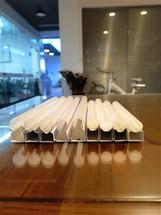
- Heat Sinks: Heat sinks are commonly used in LED linear lights to dissipate heat. A heat sink is a passive cooling device that absorbs heat from the LED chips and transfers it to the surrounding air. Heat sinks are usually made of materials with high thermal conductivity, such as aluminum. For our Aluminium LED Linear Light, the aluminum housing also serves as an effective heat sink, helping to keep the temperature of the LED chips within a safe range.
- Thermal Interface Materials: Thermal interface materials (TIMs) are used to improve the heat transfer between the LED chips and the heat sink. These materials fill in the microscopic gaps between the two surfaces, reducing the thermal resistance and allowing heat to flow more easily.
- Ventilation: Proper ventilation is crucial for heat dissipation. LED linear lights should be installed in areas with good air circulation to ensure that the heat can be carried away from the fixture. In some cases, fans may be used to enhance ventilation, especially in high - power or enclosed applications.
Real - World Applications and Heat Considerations
In different applications, the heat production of LED linear lights needs to be carefully considered:


- Residential Lighting: In homes, LED linear lights are often used for ambient lighting, under - cabinet lighting, or accent lighting. Since the power ratings of these lights are usually relatively low, the heat production is also minimal. However, it's still important to ensure proper installation and ventilation, especially in small, enclosed spaces like closets or cabinets.
- Commercial Lighting: In commercial settings such as offices, retail stores, and warehouses, LED linear lights are widely used due to their energy efficiency and long lifespan. These lights may have higher power ratings, and heat management becomes more critical. For example, in a large - scale retail store, proper ventilation and heat sinks are necessary to maintain the performance and lifespan of the Linear LED Fixtures.
- Industrial Lighting: In industrial environments, LED linear lights may be exposed to harsh conditions, including high temperatures and dust. Heat management is essential to ensure reliable operation. Industrial - grade LED linear lights often have more robust heat - dissipation mechanisms to withstand these challenging conditions.
Conclusion
In conclusion, LED linear lights do produce heat, but the amount of heat is significantly less compared to traditional lighting sources. With proper heat management techniques, such as the use of heat sinks, thermal interface materials, and good ventilation, the negative effects of heat can be minimized.
As a supplier of LED Linear Lighting, we are committed to providing high - quality LED linear lights with excellent heat - dissipation capabilities. Our products are designed to offer long - lasting performance, consistent color output, and high energy efficiency.
If you're interested in learning more about our LED linear lights or have specific requirements for your lighting project, please don't hesitate to contact us for a procurement discussion. We look forward to helping you find the perfect lighting solution for your needs.
References
- "LED Lighting Technology: Principles and Applications" by John Doe
- "Heat Management in LED Lighting Systems" published by the Lighting Research Center