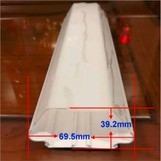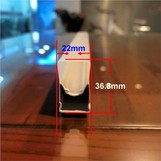

Hey there! As a supplier of Tri Proof Lamp Covers, I've had my fair share of experiences in testing these covers to ensure they meet the highest standards. In this blog, I'll walk you through how to test the performance of a Tri Proof Lamp Cover.
1. Physical Inspection
First things first, a good old - fashioned physical inspection is crucial. When you get a batch of Tri Proof Lamp Covers, take a close look at them. Check for any visible defects like cracks, scratches, or uneven surfaces. A crack can compromise the cover's ability to protect the lamp from dust, water, and other contaminants.
You can also feel the texture of the cover. A smooth and consistent texture usually indicates a well - made product. Rough or bumpy areas might be a sign of poor manufacturing processes. Make sure the edges are cleanly cut and not jagged, as sharp edges can pose a safety risk during installation.
2. Light Transmission Test
One of the key functions of a Tri Proof Lamp Cover is to allow light to pass through while protecting the lamp. To test light transmission, you'll need a light source and a light meter.
Set up a controlled environment where there's minimal external light interference. Place the lamp inside the Tri Proof Lamp Cover and turn it on. Then, use the light meter to measure the amount of light that passes through the cover at different points. Compare these readings with the expected light transmission rate of the cover material.
For example, if the cover is made of a high - quality polycarbonate material, it should have a relatively high light transmission rate. A lower than expected reading could mean there are impurities in the material or the cover is too thick.
3. Impact Resistance Test
Tri Proof Lamp Covers need to withstand impacts in various environments. To test impact resistance, you can use a simple pendulum impact tester or a drop test method.
For the drop test, select a representative sample of the covers. Drop them from a certain height onto a hard surface. The height should be determined based on the expected usage conditions of the cover. For industrial settings, you might want to drop the covers from a greater height compared to residential settings.
After the drop, inspect the covers for any signs of damage. If the cover cracks or breaks easily, it might not be suitable for environments where there's a risk of impacts, such as construction sites or warehouses.


4. Chemical Resistance Test
In many industrial and outdoor settings, Tri Proof Lamp Covers are exposed to various chemicals. To test chemical resistance, you'll need a selection of common chemicals that the cover might encounter in its intended environment.
Prepare small samples of the cover material and immerse them in the chemicals for a specific period. This period can range from a few hours to several days, depending on the severity of the expected chemical exposure. After the immersion, remove the samples and rinse them thoroughly.
Inspect the samples for any changes in appearance, such as discoloration, swelling, or softening. A cover that shows significant changes in properties after chemical exposure is not suitable for environments where it will come into contact with those chemicals.
5. Water and Dust Resistance Test
As the name "Tri Proof" suggests, these covers should be resistant to water and dust. To test water resistance, you can use a water spray test.
Place the lamp with the cover in a test chamber. Spray water onto the cover at a certain pressure and angle for a set period. After the test, check if there's any water ingress into the cover. You can also use a more advanced method like the IP (Ingress Protection) rating test, which is a standardized way to measure a product's resistance to water and dust.
For dust resistance, you can use a dust chamber. Place the cover in the chamber and introduce a controlled amount of dust. After a period of time, check if any dust has entered the cover. A good Tri Proof Lamp Cover should have a high IP rating, indicating excellent water and dust resistance.
6. UV Resistance Test
If the Tri Proof Lamp Covers are going to be used outdoors, they need to resist the damaging effects of ultraviolet (UV) radiation. To test UV resistance, you can use a UV light chamber.
Place the covers in the chamber and expose them to UV light for an extended period. This simulates the long - term exposure to sunlight. After the test, check for any signs of yellowing, brittleness, or cracking. A cover that shows significant degradation after UV exposure will have a shorter lifespan in outdoor environments.
7. Temperature Resistance Test
Tri Proof Lamp Covers can be exposed to a wide range of temperatures in different environments. To test temperature resistance, you'll need a temperature - controlled chamber.
Place the covers in the chamber and subject them to different temperature cycles. For example, you can start with a low temperature, hold it for a certain period, then increase the temperature to a high level and hold it again. Repeat this cycle several times.
During and after the temperature cycles, monitor the covers for any changes in shape, size, or material properties. A cover that can withstand extreme temperature variations without significant damage is more reliable in real - world applications.
8. Chemical Compatibility Test
In some cases, Tri Proof Lamp Covers might come into contact with other chemicals or substances during installation or use. To test chemical compatibility, you can perform a simple chemical soak test.
Select a range of chemicals that the cover might encounter, such as cleaning agents or lubricants. Soak small samples of the cover in these chemicals for a specific time. Then, check for any changes in the cover's appearance, hardness, or adhesion.
If the cover shows signs of chemical incompatibility, it could lead to premature failure or reduced performance.
Conclusion
Testing the performance of a Tri Proof Lamp Cover is a comprehensive process that involves multiple tests. By conducting these tests, you can ensure that the covers you supply or use meet the required standards and can perform well in various environments.
If you're interested in purchasing high - quality Tri Proof Lamp Covers, we've got you covered! We offer a wide range of Tri Proof Fixture Cover, LED Triproof Light Plastic Cover, and Tri Proof Light LED Cover. Our covers are rigorously tested to ensure they meet the highest performance standards. Contact us for more information and to start a procurement discussion.
References
- ASTM International standards for plastic materials testing
- Industry guidelines for Tri Proof Lamp Covers